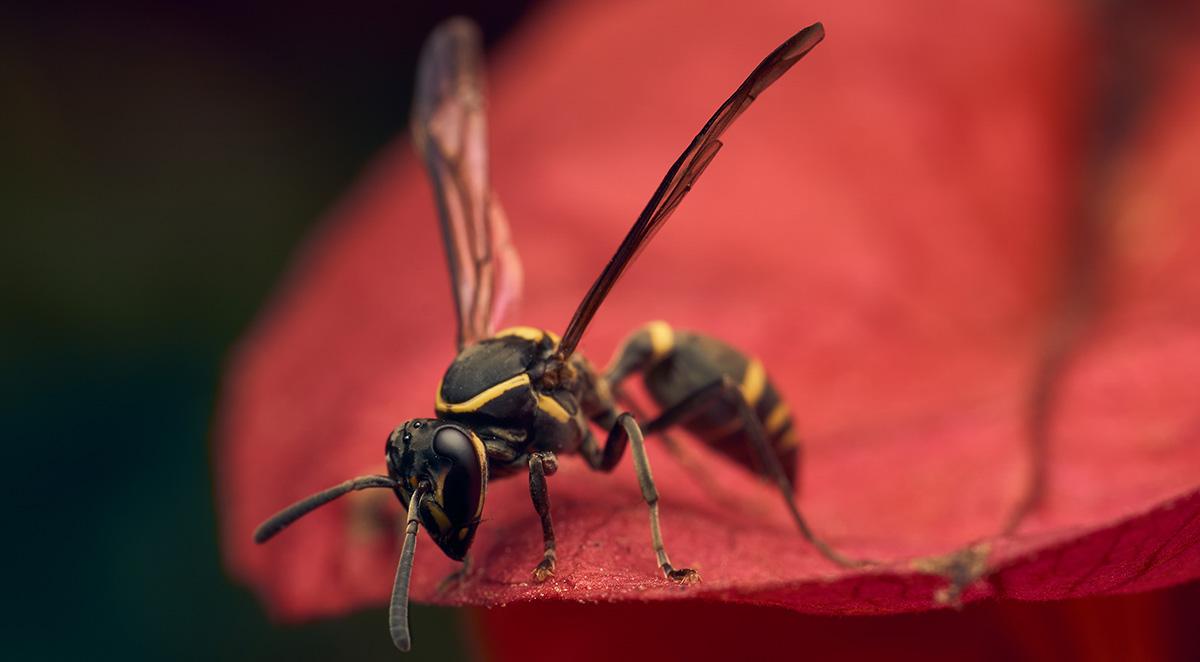
Across Riverside County and North San Diego County, residents share their yards with several species of stinging insects throughout the warmer months. Telling a bee from a wasp determines how you should respond, whether the situation calls for professional help, and how you can keep your outdoor spaces safe and enjoyable. This guide walks you through the visual clues, behavior patterns, and smart next steps so you can make confident decisions the next time something buzzes a little too close.
Quick Summary
- Bees are generally rounder and fuzzy, while wasps are slender, smooth, and have a pinched waist.
- Bees feed on pollen and nectar and are vital pollinators, whereas many wasps are predators and scavengers attracted to protein and sweets.
- Bees usually sting only when threatened, while social wasps like yellowjackets can be far more aggressive and sting repeatedly.
- Identification matters because it affects how you respond, with honey bees often warranting careful handling and aggressive wasp nests posing a safety risk.
- When a nest is near living spaces or hard to reach, contacting a licensed professional is the safest path. Reach out to Source Pest Control for an assessment.
Why the Difference is Important
It is tempting to lump all buzzing insects into one category and treat them as a single threat. In reality, bees and wasps play very different roles in our local ecosystem, and that difference should guide your response.
Bees are among the most important pollinators in Southern California. They move pollen between plants as they gather nectar, supporting everything from backyard gardens to regional agriculture. Removing or harming bees carelessly can have consequences that ripple far beyond your property line. Wasps, on the other hand, are predators and scavengers. Some species help control other pest populations by hunting caterpillars and flies, but they can also become a genuine hazard when they nest close to where people gather.
Misidentifying one for the other leads to the wrong action. Treating a docile honey bee swarm as an aggressive threat may cause unnecessary harm, while underestimating a yellowjacket colony can put your family at real risk of multiple painful stings.
How to Tell Bees and Wasps Apart
You do not need to be an entomologist to make a confident identification. A few key features will tell you most of what you need to know, even from a safe distance.
Body Shape and Appearance
The clearest difference is in the body. Bees tend to look round and robust, and many are noticeably fuzzy, with tiny hairs that help them collect pollen. Wasps look sleek and shiny by comparison, with smooth bodies and a distinctly pinched, narrow waist between the thorax and abdomen.
Consider these visual cues when you spot a stinging insect:
- Bees: rounded, fuzzy bodies, often with golden-brown and black tones and a slightly chunky appearance.
- Wasps: smooth, slender bodies with bright yellow and black banding, a thin waist, and longer legs that may dangle in flight.
- Bees usually appear to bumble along, while wasps often fly in quicker, more darting patterns.
Behavior and Diet
What an insect is doing offers another strong clue. Bees spend their time visiting flowers, gathering pollen and nectar, and generally ignoring people unless they feel cornered. Wasps are more opportunistic. Yellowjackets in particular are notorious for crashing outdoor gatherings, hovering around sodas, fruit, and grilled meat, especially in late summer and fall.
If the insect bothering your picnic is repeatedly returning to your food and drink, you are most likely dealing with a wasp rather than a bee.
Nests and Stinging
Nesting habits also help with identification. Honey bees build waxy combs and often nest in cavities such as hollow trees, wall voids, or other sheltered spaces. Wasps build very different structures depending on the species. As Source Pest Control notes about common local stinging insects, paper wasps build open, umbrella-shaped nests with visible cells under eaves and railings, yellowjackets build enclosed nests in the ground or inside wall voids, and mud daubers create distinctive tube-like mud nests on walls and under decks.
Stinging behavior is one of the most important distinctions. A honey bee can sting only once and typically does so as a last resort. Social wasps such as yellowjackets can sting repeatedly and become highly aggressive when their nest is disturbed, defending their colony with multiple stings.
Common Stinging Insects in Our Area
Southern California yards host a familiar cast of stinging insects through the warmer seasons. Knowing the local species makes identification easier and helps you anticipate where problems may appear.
- Paper wasps: These build open, umbrella-shaped nests with visible cells, typically under eaves, porch ceilings, and deck railings. They grow more aggressive as their colony expands through the summer.
- Yellowjackets: Highly aggressive when disturbed, yellowjackets nest in the ground, inside wall voids, or in protected above-ground spots. They are especially troublesome in late summer and fall when they are drawn to food at outdoor events.
- Mud daubers: These solitary wasps build tube-like mud nests on walls, eaves, and under decks. They are less aggressive than social wasps, though their nests can damage and discolor surfaces.
- Bees: Bees in the area focus on pollination and generally pose little threat unless a colony establishes itself in or near a structure, which can create safety and access concerns.
What to Do When You Spot a Bee or Wasp
Your response should match what you are actually dealing with. Here is a practical approach that keeps safety first.
If You See a Bee
Most of the time, the best thing you can do with a foraging bee is nothing at all. A bee moving from flower to flower is not interested in you and will move on. Stay calm, avoid swatting, and give it space. If a bee colony has settled into a wall void, chimney, or other part of your home, that is a different situation that calls for professional evaluation rather than do-it-yourself removal.
If You See a Wasp
Wasps require more caution, particularly when a nest is involved. Keep these steps in mind:
- Do not swat or throw objects at the nest, since this provokes a defensive response.
- Keep food and sugary drinks covered during outdoor gatherings, especially in late summer.
- Seal trash cans and clean up spills promptly to reduce the scent trails that attract scavenging wasps.
- Keep children and pets away from any nest you discover until it can be safely addressed.
- Avoid attempting to remove ground nests or nests inside wall voids on your own, as these often house large, aggressive colonies.
When to Call a Professional
Some situations are simply not worth the risk of handling alone. Reach out for professional help when a nest is large, located near doors, walkways, or play areas, hidden inside a wall or underground, or when anyone in your household has a known sting allergy. The team at Source Pest Control takes a careful, methodical approach to these challenges, balancing ecological responsibility with your family's safety.
Read our guide, “Is it worth it hiring a pest control company?”.
How Source Pest Control Handles Stinging Insects
Service begins with a thorough inspection. Licensed technicians identify the specific species present, locate all nests on the property, assess potential entry points into structures, and evaluate the risk to your family and property. From there, the team develops a customized treatment plan that may include safe removal of accessible nests, treatment of nests in difficult locations such as wall voids and high eaves, and protective treatments for likely nesting sites, all with a focus on minimal environmental impact.
The work does not stop once a nest is gone. Preventative measures help keep stinging insects from coming back, including recommendations for sealing entry points to wall voids and attics, reducing attractants, treating previous nest sites to discourage reestablishment, and managing landscaping to limit future nesting opportunities. Source Pest Control offers this stinging insect care as part of its wasp and bee management services.
As a locally owned company serving Riverside County and North San Diego County since 2011, Source Pest Control brings regional knowledge that national chains often lack. That local expertise is reflected in a 4.9 out of 5 star rating from over 700 Google reviews, recognition as a 2023 Neighborhood FAVES winner on Nextdoor, and being named "Best Pest Control Services in Murrieta" by Expertise.com in 2021. You can learn more about the company's background and approach on the About page.
Read our blog on DIY vs. Hiring a Professional.
Frequently Asked Questions
How can I tell a bee from a wasp at a glance?
Look at the body. Bees are rounder and fuzzy, while wasps are slender and smooth with a pinched waist. Behavior also helps. A bee visiting flowers is usually a bee, while an insect hovering around your food and drink is most likely a wasp.
Are wasps dangerous?
They can be. Social wasps such as yellowjackets defend their nests aggressively and can sting multiple times, which poses a serious risk to anyone with a sting allergy. Painful stings can trigger severe allergic reactions in sensitive individuals, so nests near living spaces should be treated with caution.
Should I remove a bee colony myself?
No. A bee colony that has settled into a wall, chimney, or other part of your home should be evaluated by a professional rather than removed with do-it-yourself methods. Improper removal can be dangerous and may not solve the underlying problem.
When is the best time to address a wasp nest?
Early intervention is ideal, since treating nests when they are small in spring and early summer is easier and more effective. Stinging insect problems can be addressed throughout the active season, and fall treatments are especially important for yellowjackets as colonies reach peak size and aggressiveness.
How can I prevent wasps from nesting on my property?
Regularly inspect eaves, overhangs, and sheltered areas in spring to catch nests while they are small. Sealing potential entry points to wall voids and attic spaces helps prevent colonization inside structures. A professional can provide personalized prevention recommendations during a service visit.
Conclusion
Telling bees and wasps apart is a small skill with a big payoff. It helps you protect beneficial pollinators, respond appropriately to genuine threats, and enjoy your yard without unnecessary worry. When you can read the clues in an insect's body, behavior, and nest, you are far better equipped to make the right call.
When a stinging insect problem moves beyond what is safe to handle on your own, professional help is the smart choice. Whether you are facing an aggressive yellowjacket colony or are unsure what has taken up residence under your eaves, Source Pest Control is ready to help with safe, effective, locally informed solutions. Contact us today to schedule a free estimate and take back your outdoor space.