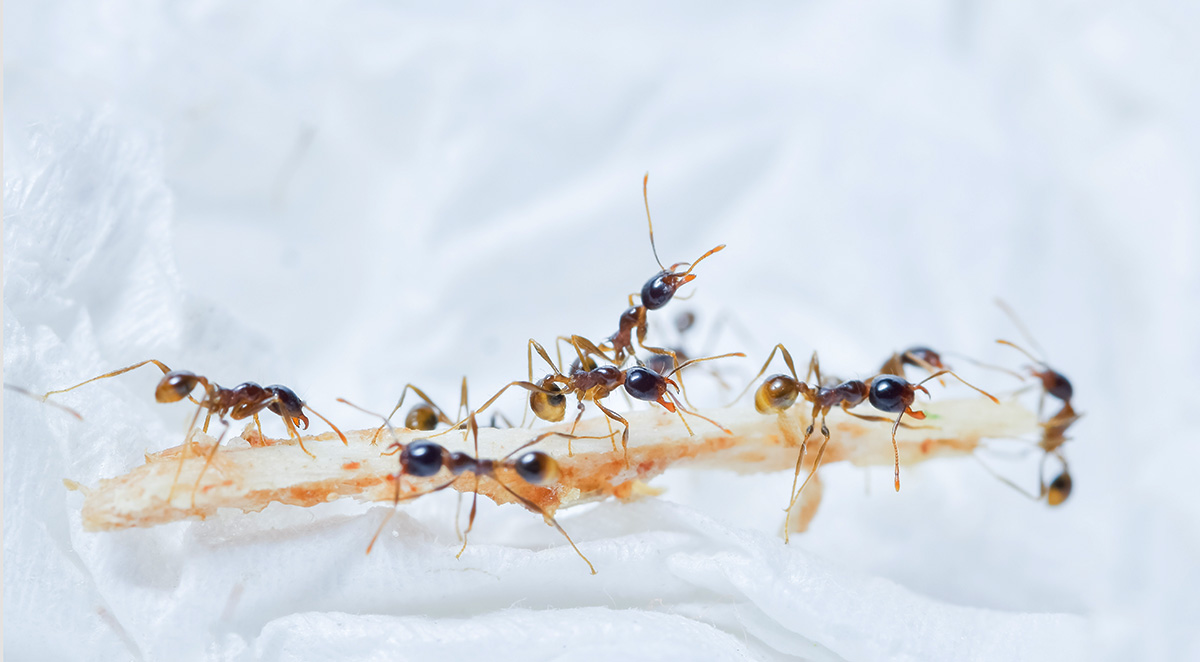
When ants invade your kitchen or roaches scurry across your bathroom floor, the first instinct for many homeowners is to reach for whatever powerful-smelling cleaner sits under the sink. Bleach tops that list. It is cheap, readily available, and kills just about anything it touches on contact, so it seems like a logical weapon against household pests. The reality, however, is far more complicated than a quick spray suggests.
At Source Pest Control, we have been answering questions from Riverside County and North San Diego County homeowners since 2011. The myths we hear have real staying power, and some of them can actually make pest problems worse. Let's separate fact from folklore so you know what truly works when bugs take up residence in your home.
Quick Summary
Here are the key takeaways from this article:
- Bleach can kill individual ants, roaches, and bed bugs on direct contact, but it does not solve infestations because it fails to reach hidden colonies, egg stages, and harborage areas.
- Using bleach can scatter ant colonies into new areas, worsening the problem and spreading activity throughout your home.
- Common home remedies for ants (vinegar, cinnamon, essential oils) may deter pests temporarily but rarely provide lasting elimination.
- DIY pest control myths often cause homeowners to delay professional treatment, giving infestations time to grow.
- Professional pest control targets the source of the problem, uses products designed for specific species, and provides preventive protection.
Does Bleach Kill Ants? The Short Answer
Yes, bleach will kill ants that come into direct contact with it. The harsh chemical composition damages their exoskeletons and interferes with their ability to breathe. If you spray a line of ants marching across your counter, most of them will die within minutes.
However, killing the ants you can see is rarely the same as solving an ant problem. A few visible ants on your countertop often represent only a small fraction of a much larger colony hidden behind walls, under foundations, or deep in your landscaping. That colony can contain thousands or even millions of ants, along with one or more queens that continue producing new workers around the clock.
Why Bleach Fails as Long-Term Ant Control
Understanding why bleach falls short as a real solution requires a closer look at how ant colonies actually operate.
Bleach Doesn't Reach the Colony
Ants you see in your home are almost always worker ants searching for food and water to bring back to the colony. The queen, the eggs, and the bulk of the population stay hidden. Bleach kills only the workers it touches, leaving the reproductive heart of the colony completely untouched. Within hours or days, new workers follow the same pheromone trails and the problem returns.
Bleach Can Actually Scatter Ants
Certain ant species, particularly the Argentine ants that dominate Southern California, respond to chemical threats by splitting their colonies. This is called budding, and it can transform one localized problem into several separate colonies spread across your property. Instead of eliminating the issue, aggressive bleach use may multiply it.
Safety Concerns with Bleach Use
Bleach poses real risks when used as a pest control tool. The fumes can irritate lungs, eyes, and skin. Mixing bleach with other cleaning products, especially ammonia-based cleaners or vinegar, creates toxic gases. Spraying bleach around food preparation areas, pet bowls, or children's play spaces introduces hazards that professional treatments are specifically designed to avoid.
For detailed preventative tips, read our blog on preparing for spring ant season.
Does Bleach Kill Roaches?
This is another common question, and the answer follows the same pattern. Bleach can kill a cockroach if you manage to fully submerge it or drench it with enough volume to penetrate its exoskeleton. A casual spray, however, often does little more than annoy a determined roach.
Cockroaches are legendary survivors for good reason. They hide in cracks as thin as a credit card, breed rapidly, and carry eggs in protective cases called oothecae that resist many chemicals. Pouring bleach down a drain might kill a few roaches that happen to be present, but it will not touch the population living behind your refrigerator, inside wall voids, or within your cabinetry.
Why Roaches Are So Hard to Kill with DIY Methods
Roaches present several challenges that make store-bought and homemade solutions unreliable:
- Their egg cases protect developing roaches from most surface sprays.
- They can survive weeks without food and days without water.
- Many species have developed resistance to common over-the-counter pesticides.
- They travel through plumbing voids, wall cavities, and shared walls in multi-unit buildings.
- A single female German cockroach can produce hundreds of offspring in her lifetime.
Professional roach elimination involves identifying the species, locating harborage areas, and applying targeted baits and residual treatments that roaches carry back to their hiding spots. You can learn more about our comprehensive approach on our residential pest control page.
Does Bleach Kill Bed Bugs?
Bed bugs are perhaps the most persistent myth magnet of all household pests. Homeowners desperate for relief have tried everything from bleach to rubbing alcohol to freezing temperatures. While bleach will kill a bed bug on direct contact, using it against an infestation is almost guaranteed to fail.
Bed bugs hide in seams of mattresses, behind baseboards, inside electrical outlets, within furniture joints, and in cracks so small they are invisible to the naked eye. Their eggs are often glued to surfaces in protected locations where no spray can reach. Even industrial-strength contact chemicals struggle to eliminate bed bugs without professional-grade techniques.
Why Bed Bugs Require Professional Treatment
Bed bug elimination demands a multi-stage approach that addresses every life stage of the insect. At Source Pest Control, we use multi-stage protocols designed specifically for bed bug elimination because one-time sprays almost never solve the problem. Applying bleach to mattresses, carpets, and upholstery also damages the fabric and fades colors while failing to reach the bugs hiding inside.
Common Home Remedies for Ants: Do They Actually Work?
Before we look at the bigger picture of DIY myths, let's break down some of the most popular home remedies for ants and what science actually shows.
- Vinegar: Vinegar disrupts the scent trails ants leave behind, which can temporarily confuse foragers. It does not kill the colony and ants will typically reestablish trails within hours.
- Cinnamon: Cinnamon is a mild repellent that some ant species avoid. It does nothing to eliminate a nest and offers inconsistent results depending on the species.
- Essential oils: Peppermint, tea tree, and citrus oils can deter ants in small areas. They evaporate quickly, require constant reapplication, and do not affect the queen.
- Borax and sugar baits: This is one of the more effective home remedies because workers carry the poison back to the colony. Results are inconsistent, however, because the bait must be properly balanced and placed in high-traffic areas without competing food sources.
- Diatomaceous earth: Food-grade diatomaceous earth damages ant exoskeletons through mechanical abrasion. It works only when completely dry and can be messy in living spaces.
These options may provide short-term relief for a handful of stray ants, but none of them reliably solves an established infestation.
DIY Pest Control Myths Debunked
The internet is full of advice that sounds clever but rarely holds up in practice. Here are some of the most persistent myths we encounter:
Myth 1: If I kill the ants I see, the problem is solved.
Visible ants are foragers, not the colony itself. Eliminating workers does nothing to reproduction.
Myth 2: Cleaning more will make pests leave.
Clean homes get infested too. Pests need only tiny amounts of food, water, or shelter to establish themselves.
Myth 3: One treatment will end the problem forever.
Pest pressure in Southern California is year-round, and new colonies can move in from neighboring properties even after successful treatment.
Myth 4: Natural means safe.
Many natural substances are toxic to pets, children, or people with allergies. Safety depends on proper application, not on whether something is labeled organic.
Myth 5: Bug bombs and foggers solve everything.
Foggers often push pests deeper into walls and rarely reach the hidden areas where colonies actually live.
Do home remedies work for pests? Sometimes, for small or very new problems. For established infestations, they typically waste time and let the issue grow.
What Actually Works: Professional Pest Control
Effective pest management combines accurate identification, targeted treatment, and ongoing prevention. Our licensed California technicians at Source Pest Control approach every property with a systematic process that addresses the real source of the problem rather than just the symptoms on the surface.
Our comprehensive approach includes:
- Thorough inspection to identify species and entry points
- Targeted treatments using professional-grade products not available to consumers
- Colony elimination strategies for ants, including the queen
- Multi-stage protocols for bed bug elimination
- Exclusion work that addresses long-term prevention
- Quarterly maintenance programs that keep pests out year-round
- Free service calls between visits if pests return
For more information about our specific approaches, explore our pages on ant control and roach control. And check out our guide, Is It Worth It Hiring a Pest Control Company?
Frequently Asked Questions
Is it safe to use bleach around food preparation areas?
Bleach residue on countertops, inside cabinets, or near food storage areas can contaminate food and create health risks. If you do use bleach as a cleaner, rinse surfaces thoroughly and keep it away from areas where food is prepared or stored.
Will bleach keep ants from coming back?
No. Bleach evaporates quickly and leaves no lasting barrier. Ants will return as soon as the residue dissipates, usually within hours.
Can I combine bleach with other household products for stronger pest control?
Absolutely not. Mixing bleach with ammonia, vinegar, or rubbing alcohol produces toxic gases that can cause serious respiratory harm. Never combine cleaning chemicals in an attempt to increase pest-killing power.
Why do ants keep coming back even after I spray them?
Because the ants you see are only a tiny portion of the colony. The queen continues producing new workers, and pheromone trails guide them right back to the same food sources.
Are professional pest control products safe for children and pets?
When applied by trained professionals according to label instructions, modern pest control products are designed to be safe for family use. We take extra care in homes with children, pets, and sensitive occupants.
Conclusion
Bleach is a powerful cleaning agent, but it is not a pest control solution. It may kill the few ants, roaches, or bed bugs that come into direct contact with it, yet it leaves the core of every infestation untouched. Relying on bleach or other home remedies often gives pest populations the time they need to grow, spread, and become much harder to eliminate.
If you are battling a persistent pest problem in Riverside County or North San Diego County, skip the myths and reach out to a licensed local team that knows exactly what works in our region. Visit our contact page to schedule a free inspection and estimate, and let our experienced technicians deliver the lasting results your home deserves.