Source Pest Control has been handling stinging insect problems throughout southwest Riverside County since 2011, and our licensed technicians know how to remove nests safely rather than provoking a defensive colony.
Wasps do serve a purpose in the local ecosystem, controlling other pest populations that would otherwise damage gardens and landscaping. The problem is location. When a colony establishes itself on or inside a structure where people live and work, ecology takes a back seat to safety. Our approach balances both, targeting the nests that put your family at risk while keeping treatment focused and environmentally responsible. If you need wasp removal in Murrieta quickly, we often respond within 24 hours.
Why Stinging Insects Deserve Immediate Attention
A nest near a doorway, play structure, or air conditioning unit creates real risk. Unlike most household pests, stinging insects actively defend their territory, and the consequences of disturbing them can be serious:
- Painful stings that can trigger severe allergic reactions in sensitive individuals
- Aggressive defense of nests, particularly by certain wasp species
- Multiple stings from social wasps defending their colonies
- Anxiety and limited outdoor enjoyment when nests are near living spaces
Colonies also grow. A nest the size of a golf ball in April can house hundreds of workers by August. Early treatment is almost always simpler, safer, and less disruptive than waiting until a colony reaches peak size.
Common Stinging Insects in Southern California
Correct identification drives everything that follows. Species differ in where they nest, how aggressively they respond to disturbance, and which treatment method actually works.
Paper Wasps
Paper wasps build open, umbrella-shaped nests with visible cells, typically under eaves, porch ceilings, and deck railings. They are relatively docile early in the season but become increasingly aggressive as the colony grows through summer. Because their nests are exposed and often within arm's reach, homeowners frequently discover them while cleaning gutters, painting trim, or hanging holiday lights.
Yellowjackets
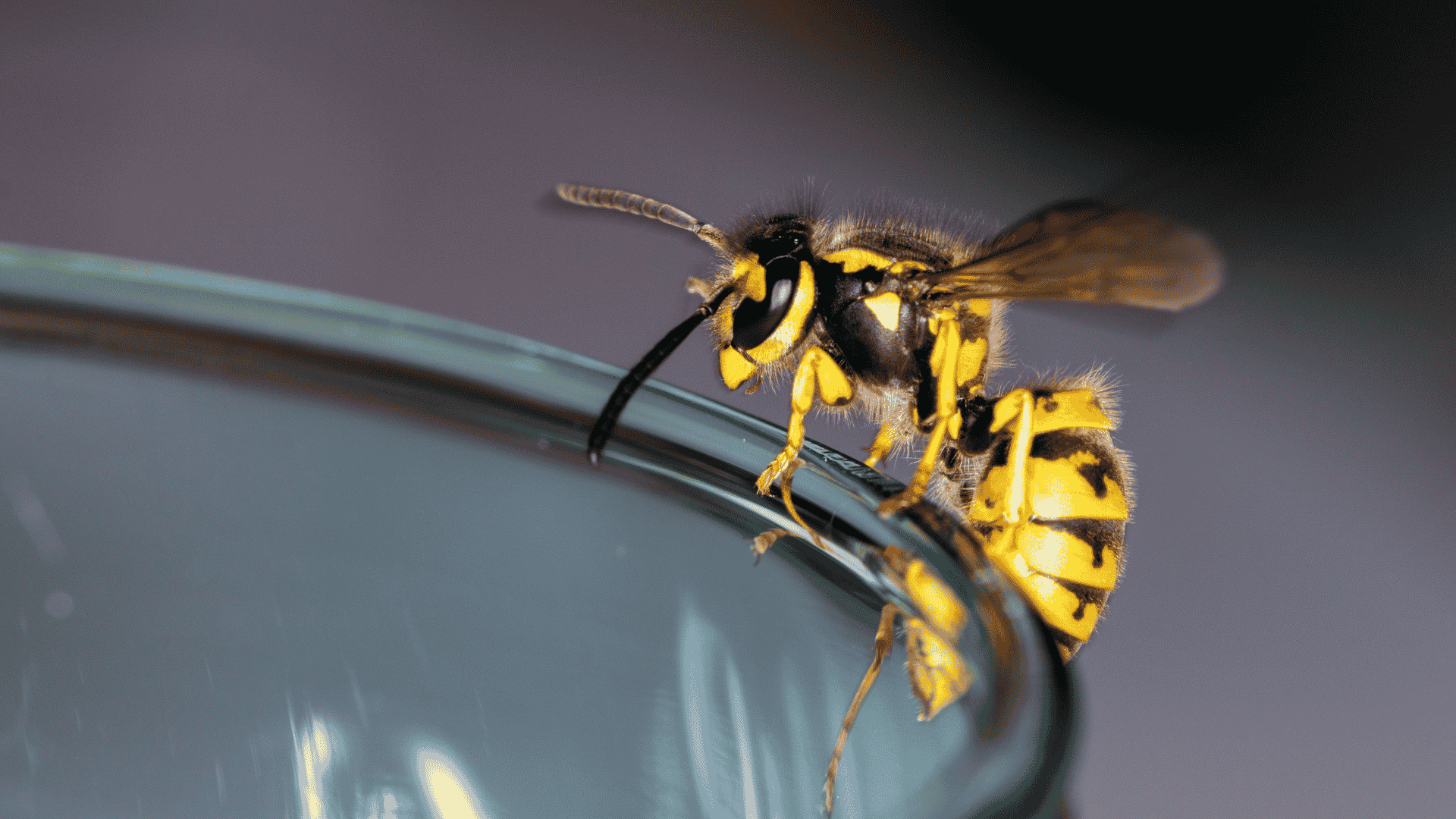
Yellowjackets are highly aggressive when disturbed and build enclosed nests in the ground, inside wall voids, or in protected above-ground locations. They are especially problematic during late summer and fall, when colonies peak in size and workers are drawn to food and sugary drinks at outdoor gatherings. Ground nests are particularly hazardous because they are easy to step on or run over with a mower before anyone notices the entrance. If you need yellow jacket removal, do not attempt to locate a ground nest yourself.
Mud Daubers
These solitary wasps create distinctive tube-like mud nests on walls, eaves, and under decks. They are far less aggressive than social wasps, but their nests stain and damage stucco, paint, and trim. Abandoned mud dauber nests can also be taken over by other insects, so removal is worthwhile even after the original occupants leave.
Bees
Bee activity around a structure requires careful evaluation before anyone takes action. Our wasp and bee management service covers safe removal of stinging insect nests, and identification during the inspection determines the appropriate response for your specific situation. Never seal a bee entry point on your own, since trapped insects will often find another route into the living space.
Our Professional Approach
Every stinging insect job follows the same disciplined sequence. You can read more about our full wasp and bee services on our main service page.
- Thorough inspection. We identify the specific species present, locate every nest on the property, assess potential entry points into the structure, determine the extent of the problem, and evaluate the risk to your family and property. Finding all the nests matters as much as treating the obvious one.
- Customized treatment plan. Based on what we find, we develop a targeted strategy that includes safe and effective removal of accessible nests, treatment of nests in difficult locations such as wall voids and high eaves, protective treatments for likely nesting sites, and a focus on minimal environmental impact.
- Preventative measures. Long-term protection comes from changing the conditions that attracted the colony. We recommend sealing entry points that give access to wall voids and attics, suggest ways to reduce attractants, treat previous nest sites to discourage reestablishment, and provide guidance on landscape management that limits nesting opportunities.
Where Stinging Insects Nest on Local Properties
Our technicians check the same high-probability locations on every visit, because colonies favor sheltered spots with easy access to open air:
- Under eaves, soffits, and second-story overhangs
- Inside patio covers, pergolas, and shade structures
- Wall voids and attic spaces reached through small gaps in siding or vents
- Ground burrows in landscaping, under shrubs, and along slope edges
- Behind shutters, address plaques, and exterior light fixtures
- In and around barbecue islands, pool equipment, and outdoor kitchens
- Sheds, garages, and detached workshops
- Playground equipment, trampolines, and other yard structures
- Irrigation boxes and utility vaults
Local Property Concerns
The geography of southwest Riverside County produces predictable variations. Established neighborhoods with mature landscaping and older wood trim offer more sheltered nesting cavities than new construction does. Properties bordering open space, golf courses, or equestrian areas sit closer to natural nesting habitat, which means more frequent colonization attempts each spring. Homes with pools, outdoor kitchens, and heavy irrigation attract foraging wasps looking for water and food sources during dry months. Yellowjacket activity is also a known concern near agricultural land and vineyard areas in the surrounding region.
Why Nest Removal Is Not a Do-It-Yourself Project
Hardware store aerosols create two problems. They rarely reach the interior of an enclosed nest, and they almost always agitate the colony. A partially treated yellowjacket nest in a wall void can drive workers deeper into the structure, sometimes into interior rooms. Ladder work near an active paper wasp nest is its own hazard, since a single sting at height can cause a fall.
Professional treatment differs in three ways:
- We identify the species first, then select a method matched to how that species nests
- We carry protective equipment and application tools that reach voids, high eaves, and ground burrows
- We treat the nest site afterward so the location does not simply attract a new colony next season
Protection for Homes and Businesses
Stinging insect service is available as a targeted one-time treatment or as part of ongoing protection. Many households add it to a maintenance program so that nests are found and removed during quarterly visits rather than discovered by accident. Our residential pest control programs include exterior treatment, web and nest removal from eaves and entry points, and free service calls between scheduled visits if pests return.
Businesses face additional exposure. A nest near a restaurant patio, a retail entrance, or a warehouse loading dock is both a liability concern and a customer experience problem. Our commercial pest control team services restaurants along Madison Avenue, retail centers including The Village at Murrieta Hot Springs, office complexes on Los Alamos Road, healthcare facilities, schools, and property management portfolios, with scheduling arranged around your operating hours.
Neighborhoods We Serve in 92562 and 92563
Our technicians work throughout both zip codes, including:
- Bear Creek
- Alta Murrieta
- Copper Canyon
- Greer Ranch
- The Preserve
- California Oaks
- Spencer's Crossing
- Los Alamos
- The Colony
- Murrieta Hot Springs
- Mapleton
- Murrieta Highlands
- The Murrieta Equestrian Park area
- Adjacent communities throughout southwest Riverside County
For the full picture of where we work, see our service area overview.
Frequently Asked Questions
When is the best time to treat for wasps?
Early intervention is ideal, since treating nests while they are still small in spring and early summer is easier and more effective. That said, we address stinging insect problems throughout their active season. For yellowjackets, fall treatments are particularly important because colonies reach peak size and aggressiveness during those months.
How can I prevent wasps from nesting on my property?
Regular inspection of your property in spring, particularly eaves, overhangs, and sheltered areas, helps you find and address nests while they are small. Sealing potential entry points to wall voids and attic spaces prevents colonization inside the structure. We provide personalized prevention recommendations during service.
How much does stinging insect control cost?
Cost depends on the species, the number of nests, their location, and whether the work is a one-time treatment or part of an ongoing program. A ground nest in an open lawn is a different job than a colony inside a second-story wall void. We provide a free inspection and a written estimate before any work begins, so please contact us for pricing specific to your property.
How quickly can you come out?
We often respond within 24 hours, and emergency service is available. Tell us what you are seeing and where the activity is concentrated, and we will let you know the soonest appointment we have.
Is treatment safe for my family and pets?
Yes. Our technicians are California-licensed professionals who apply products precisely at the nest and entry points rather than broadcasting treatment across the yard. We explain any short reentry period before we leave, and we build the plan around any specific concerns you raise about pets, gardens, or family members with sensitivities.
Will the nest come back after treatment?
Nesting sites that worked once tend to work again, which is why we treat previous nest locations and recommend exclusion measures rather than stopping at removal. Properties on a maintenance program get repeat inspections that catch new nests early.
Do you handle nests inside walls and attics?
Yes. Nests in wall voids, attic spaces, and high eaves are among the most common calls we take, and they are the situations where professional equipment matters most.
Schedule Your Free Inspection
You should not have to give up your own backyard. Source Pest Control provides stinging insect control Murrieta property owners can count on, delivered by licensed local technicians who know these neighborhoods. Learn more about our team or reach out directly.
Call (951) 401-1318 or visit our contact page to schedule your free inspection and estimate.
Business hours:
- Monday through Friday: 7:30 AM to 6:00 PM
- Saturday: 9:00 AM to 4:00 PM
- Sunday: Closed