Source Pest Control is locally owned, headquartered right here in Temecula, and has been treating ant infestations throughout the area since 2011. Our team has deep firsthand knowledge of the ant species, seasonal patterns, and neighborhood-specific conditions across zip codes 92590, 92591, and 92592 that drive persistent ant problems year after year.
Why Ant Infestations Are So Common Here
Temecula's climate is genuinely excellent for outdoor living, and that same warmth, combined with irrigated landscaping, mild winters, and a mix of established neighborhoods and newer developments, creates near-ideal conditions for ants to thrive year-round. The most prevalent species by far is the Argentine ant, an invasive species that has dominated the Southern California pest landscape and presents challenges that most homeowners are not equipped to resolve on their own.
Argentine ants do not behave like most ant species. Rather than competing with neighboring colonies, they cooperate, forming interconnected super-colonies that can span vast distances underground. Newer developments in areas like Redhawk and Harveston are particularly vulnerable, as land disturbance during construction displaces established ant populations and triggers aggressive colonization of fresh landscaping and new structures. Established neighborhoods throughout the city carry their own risk from mature, deeply entrenched colonies that have been cycling through the area for years.
Ant Species We Treat in the Temecula Area
Understanding which ant species you are dealing with is the foundation of effective treatment. Our technicians are trained to identify species accurately before recommending any treatment approach, because different species require meaningfully different strategies.
Argentine Ants
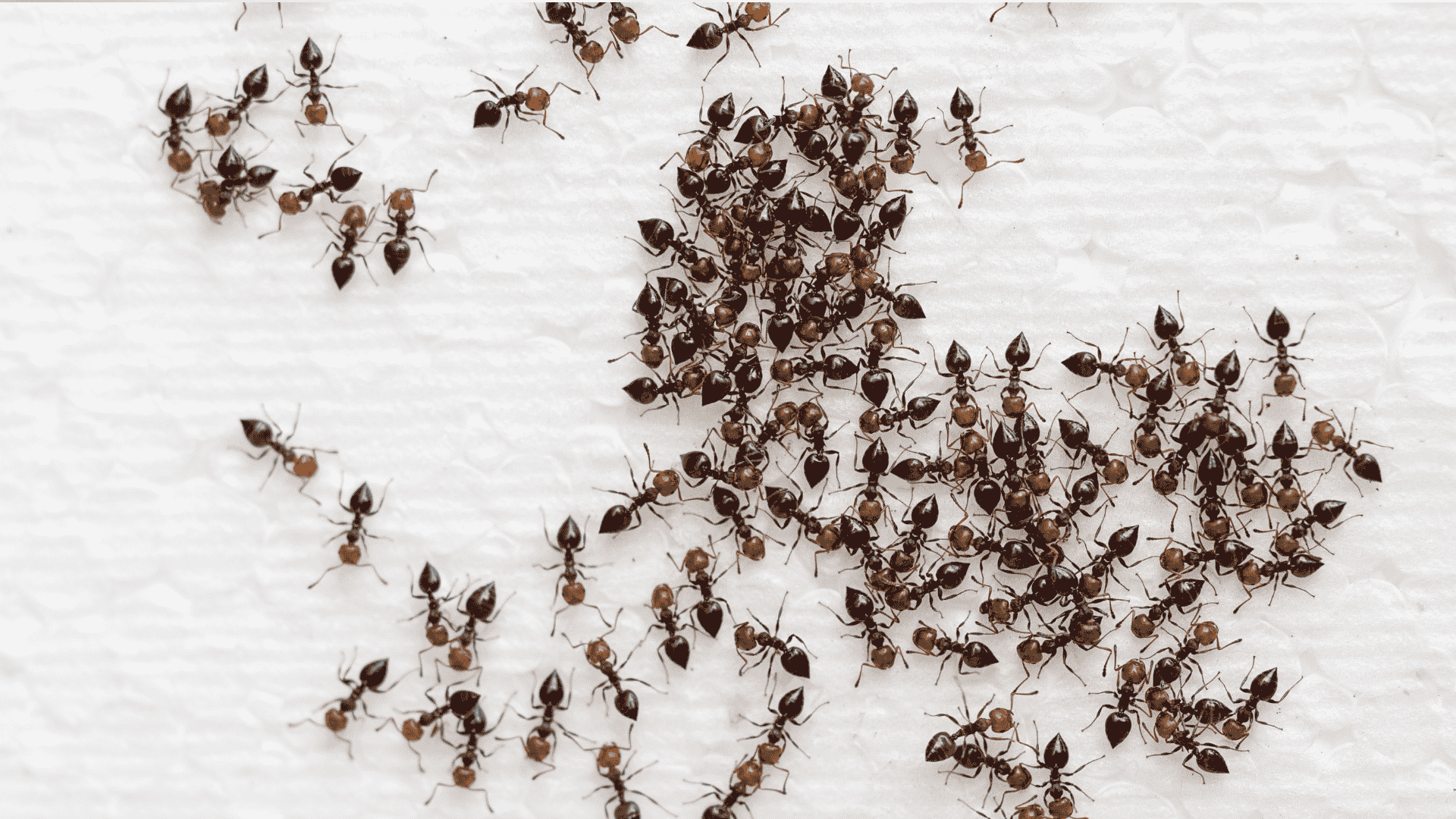
Argentine ants are small, light to dark brown, and travel in dense, well-defined trails. Their super-colony structure with multiple queens makes them exceptionally resistant to consumer-grade treatments and even many professional approaches that are not targeted correctly. Argentine ant treatment must be designed to affect the colony as a whole, not just the workers on the trail.
Carpenter Ants
Larger than Argentine ants, carpenter ants excavate wood to build their nests rather than consuming it. Over time, this tunneling can compromise the structural integrity of wood framing, window frames, and door jambs. If you are seeing large black or reddish ants around wood structures, window trim, or the perimeter of older parts of your home, carpenter ant activity warrants prompt professional assessment.
Odorous House Ants
Named for the distinctly unpleasant rotten coconut-like smell they release when crushed, odorous house ants are frequent kitchen and pantry invaders. They are attracted to sugary foods and moisture sources and commonly establish trails along baseboards, under sinks, and near appliances where condensation accumulates.
Fire Ants
Fire ants are less common in urban residential settings but are encountered in certain areas, particularly near open land and newly disturbed soil. They deliver painful, venomous stings that can trigger allergic reactions in some individuals and are aggressive when their mound is disturbed. Fire ant presence on a property, especially near areas where children or pets spend time, is a situation that calls for immediate professional attention.
Why Store-Bought Treatments Consistently Fail
Most over-the-counter contact sprays kill the worker ants they touch and leave a short-lived repellent barrier that the colony quickly detects and routes around. The queens, which drive reproduction, are never exposed to surface treatments and continue generating new workers to replace those lost. In some cases, repellent products actually cause colony splitting, a survival response where the colony fragments into multiple groups and spreads to new areas of the property. What starts as one entry point becomes three or four.
Our Ant Control Process
Source Pest Control's approach to ant management follows a structured, three-step process designed to eliminate the current infestation and prevent it from returning.
Step 1: Thorough Inspection
Every effective ant treatment begins with understanding exactly what you are dealing with. Our technicians conduct a comprehensive property inspection to:
- Identify the ant species present and confirm the primary driver of the infestation
- Locate nesting and colony areas where possible
- Map the access routes ants are using to enter the structure
- Identify conducive conditions on the property, including moisture sources, landscaping features, and structural entry points, that are sustaining the infestation
Step 2: Customized Treatment
Based on inspection findings, we develop a targeted treatment plan that uses professional-grade products selected specifically for the ant species involved. Our treatment approach includes:
- Applying treatments designed to reach beyond visible workers and affect the entire colony, including reproductive queens
- Creating protective barriers at the perimeter of the structure to stop new foragers from entering
- Treating both interior and exterior areas as needed based on the scope and location of activity
- Using products that are not available to consumers and that are formulated for the species-specific biology of the ants we are treating
Step 3: Exclusion and Prevention
Eliminating the current infestation is only part of a lasting solution. Our technicians also focus on making your property less vulnerable to future invasions:
- Recommending specific cracks, gaps, and crevices that should be sealed to deny entry
- Addressing moisture issues that attract ants to the structure
- Providing guidance on landscaping, irrigation, and storage practices that reduce ant attractants
- Creating a maintained protective barrier around your property through ongoing service
Neighborhoods We Serve Throughout Temecula
Our technicians are familiar with every part of the city and the specific ant pressures each area tends to experience. We regularly serve homeowners and businesses throughout:
- Redhawk and Harveston, where Argentine ant infestations in newer landscaping are particularly common
- Wolf Creek, Paloma Del Sol, and Paseo Del Sol, where summer ant pressure peaks in established yards
- Morgan Hill, Meadowview, and Vail Ranch
- Old Town and Crown Valley
- Wine Country estates and Nicolas Valley properties
- Santiago Estates and Temecula Creek
Whether your property is in a densely built neighborhood or a rural-adjacent Wine Country estate, our team knows the ant pressures specific to your area and brings that local knowledge to every service call.
Why Local Homeowners Choose Source Pest Control for Ant Problems
The reasons homeowners rely on Source Pest Control is because of our results and accountability.
- Locally headquartered since 2011. We are not a franchise. We live and work in this community and treat the ant pressures here every single day.
- Skilled species identification. Our technicians identify the specific ant species before treating, ensuring the right products and methods are applied for the situation at hand.
- Professional-grade products. We use formulations that are not available to consumers and that are selected for their effectiveness against the specific biology of Argentine ants and other local species.
- Free callbacks. If ants return between scheduled visits, we come back at no additional cost.
- Quarterly maintenance program. Our ongoing service plan maintains a protective barrier year-round, with seasonal adjustments that keep pace with changing ant pressure throughout the year.
Frequently Asked Questions About Ant Control in Temecula
Why do I keep getting ants even after spraying?
Most consumer contact sprays kill only the visible worker ants and leave the colony, including its queens, entirely unaffected. Some repellent products cause Argentine ant colonies to split into multiple groups, spreading the problem. Professional treatments are designed to reach the colony and eliminate it at the source rather than displacing surface activity.
How long does professional ant treatment take to work?
Most ant infestation homeowners bring to us show significant improvement within one to two days of treatment. Complete colony control typically takes one to two weeks as the treatment works through the colony structure. Severe or multi-colony infestations may require follow-up treatment, which Source Pest Control provides at no additional cost.
How often do I need ant control service?
A single treatment can resolve an active infestation, but Argentine ants are persistent and seasonal pressure recurs. Our quarterly maintenance program is the most effective way to maintain lasting protection, keeping a treated barrier in place through each seasonal surge and including free service calls if activity returns between visits.
Are ant treatments safe for my family and pets?
Yes. We use products formulated to target ant biology while being safe for use around people and pets when applied as directed. Our technicians will walk you through any relevant precautions, such as staying off treated surfaces until they are fully dry.
Do you treat commercial properties for ants?
Yes. Ant control businesses need is handled through our commercial pest control services. We work with restaurants, retail spaces, office buildings, healthcare facilities, and property management companies throughout the area, providing discreet, effective service with full documentation.
Get Rid of Ants for Good
Persistent ant invasions are one of the most frustrating pest problems a homeowner can face, but with the right professional approach, they are entirely manageable. Source Pest Control has been the trusted ant exterminator Temecula homeowners and businesses have relied on since 2011, and our locally headquartered team is ready to help.
Contact us today to schedule a free inspection and find out what targeted, professional ant removal can do for your home or business.