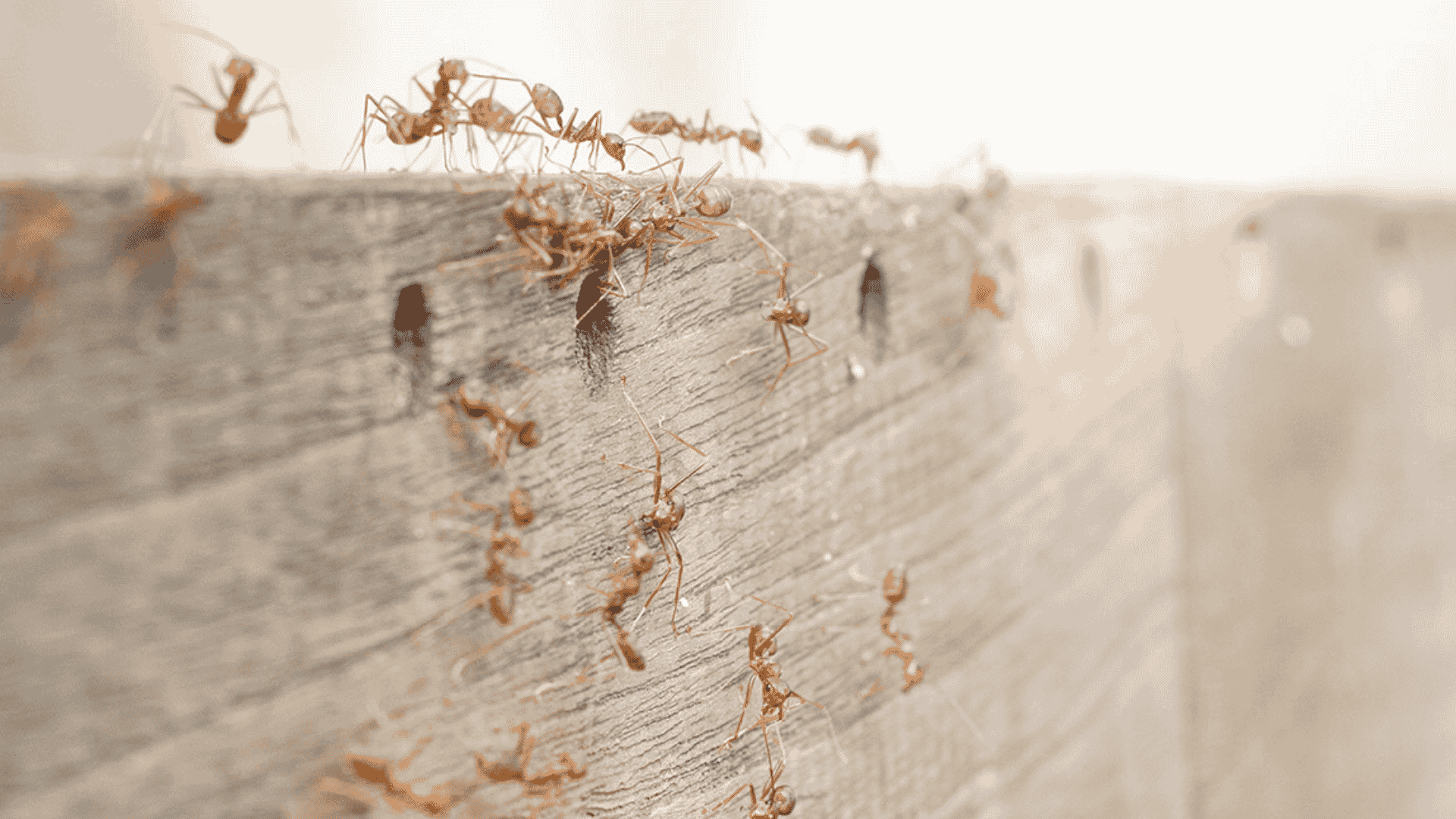
If you have ever watched a relentless trail of tiny ants marching across your kitchen counter, across your bathroom floor, or along the baseboards of your living room, there is a good chance you were looking at Argentine ants. These small but remarkably persistent insects have become the dominant ant species throughout Southern California, and homeowners in Hemet and the surrounding Inland Valley are feeling it in a very real way.
This guide will help you understand the steps you can take toward taking back control of your space. If you want professional assistance in the Hemet area, Source Pest Control is here to help.
What Are Argentine Ants?
Argentine ants (Linepithema humile) are native to South America and were introduced to the United States in the late 1800s, likely through shipping cargo. Since then, they have spread across the southern United States, California, and many other parts of the world with warm, Mediterranean-style climates. In Southern California, they have become the most commonly encountered ant species in both residential and commercial settings.
These ants are relatively small, light to dark brown in color, and typically measure about 2 to 3 millimeters in length. They do not sting and are not structurally destructive in the way that carpenter ants can be. What makes them remarkable, and remarkably difficult to control, is their colony structure.
The Super-Colony Advantage
Most ant species are territorial and will actively fight other colonies of the same species. Argentine ants behave very differently. In their introduced range throughout California, Argentine ant colonies cooperate rather than compete with one another, forming what scientists refer to as super-colonies. A single interconnected super-colony can span many miles and contain millions, or even hundreds of millions, of individual ants.
This cooperative behavior means that when you treat one part of the colony, the ants are capable of reorganizing and re-entering your home from a different access point. It also means that the population available to invade your property at any given time is enormous.
Why Hemet Homes Are Especially Vulnerable
The San Jacinto Valley, where Hemet (zip codes 92543, 92544, 92545, and 92546) sits, provides near-ideal conditions for Argentine ant activity throughout much of the year. Several factors make local homes particularly susceptible to invasion.
Climate and Seasonal Pressure
Argentine ants are highly sensitive to both heat and drought. When temperatures spike or water sources dry up outdoors, these ants move aggressively toward structures in search of moisture and food. Hemet's hot, dry summers create exactly these conditions. During heat waves, ant invasions in kitchens and bathrooms often intensify dramatically because interior moisture becomes a primary draw.
Conversely, winter rains also drive ant activity. When the soil becomes saturated, ants move upward and inward, seeking drier harborage. This means Hemet homeowners often notice surge activity in two distinct seasons: midsummer and following winter rains.
Landscaping and Irrigation
Many Hemet neighborhoods feature mature landscaping with irrigated yards, garden beds, and ornamental plants. Argentine ants thrive in irrigated areas because consistent moisture near structures allows them to maintain colonies close to their food sources. Drip irrigation lines, leaky sprinkler heads, and moist mulch beds all provide the humid soil conditions Argentine ants prefer for nesting.
Older Neighborhood Infrastructure
Established neighborhoods often have aging infrastructure with small cracks in foundations, gaps around utility penetrations, deteriorating weatherstripping, and older construction methods that left more unintentional entry points than modern builds. Argentine ants are experts at exploiting these access points and can enter structures through openings as small as 1 millimeter.
Signs You Have an Argentine Ant Infestation
Recognizing an Argentine ant invasion early can make a meaningful difference in how quickly and effectively it is resolved. Here are the most common signs local homeowners should watch for:
- Visible ant trails: Argentine ants travel in defined, two-directional trails. You will typically see one lane of ants moving toward a food or water source and another lane moving away from it. These trails are often quite long and can extend from outdoor nesting sites well into a home's interior.
- Activity near moisture: Kitchens, bathrooms, and laundry rooms are hotspots. Argentine ants are drawn to water sources, so finding them around sinks, under appliances, or near plumbing is a common early indicator.
- Multiple queens: Unlike many ant species, Argentine ant colonies maintain multiple queens. This is significant because it means the colony can split and relocate quickly when disturbed, making DIY treatments particularly likely to backfire.
- Outdoor nesting in soil: Argentine ants typically nest in the soil just below the surface, often under rocks, mulch, pavers, or along the edges of structures. You may notice loose soil or ant activity in garden beds close to your home's foundation.
- Surging numbers after weather changes: A sudden, significant increase in ant activity following a heat wave or rainstorm is a strong indicator of Argentine ants responding to environmental pressure.
Why Over-the-Counter Treatments Fall Short
This is a question that the team at Source Pest Control hears frequently from Hemet homeowners: "I sprayed the ants I saw, but they just came back. What am I doing wrong?"
The answer lies in how Argentine ant colonies are structured. Most consumer sprays and bait products are designed to kill visible worker ants on contact or to affect individual colony members. The problem is that Argentine ant colonies can contain thousands to millions of individuals, and the queens that drive reproduction are rarely exposed to surface treatments.
There are a few specific reasons why DIY approaches so often fail:
- Contact sprays only kill what they touch. Worker ants you spray make up a small fraction of the total colony. Within hours, more workers emerge to take their place.
- Repellent products can cause colony splitting. Certain over-the-counter repellent sprays actually cause Argentine ant colonies to fracture into multiple smaller groups, spreading the infestation to new areas rather than eliminating it.
- Bait placement requires expertise. Effective baiting relies on correct product selection for the specific ant species and precise placement along active trails. Misapplied bait is often ignored entirely by the ants.
- Entry points remain open. Even a successful surface treatment does nothing to seal the access routes ants are using. Without addressing how they are getting in, new workers re-enter from the same super-colony shortly after treatment.
This is why residents searching for a Hemet exterminator or a reliable Hemet pest control company consistently find that professional intervention produces results that store-bought products simply cannot match.
What Professional Argentine Ant Control Looks Like
The approach to Argentine ant management should be built around eliminating the colony, not just the workers you can see. The process involves several coordinated steps.
Step 1: Thorough Inspection
Every effective treatment starts with understanding exactly what you are dealing with. Our licensed technicians conduct a comprehensive inspection of your property to:
- Identify the ant species present and confirm it is Argentine ants versus another species
- Locate nesting areas and active trail routes
- Identify how ants are entering the structure
- Assess conditions on your property that are contributing to the infestation, such as moisture sources, landscaping features, or entry points
Step 2: Customized Treatment Plan
No two properties are exactly alike, and Argentine ant infestations vary in severity, access point location, and colony distribution. Based on our inspection findings, we build a targeted treatment plan that includes:
- Professional-grade products selected specifically for Argentine ants and not available to consumers
- Treatments designed to reach beyond visible workers and affect the entire colony, including reproductive queens
- Both interior and exterior applications where appropriate
- Protective barrier treatments around the perimeter of your home
Step 3: Exclusion and Prevention Recommendations
Addressing the current infestation is only part of the solution. Our technicians also provide specific guidance on reducing conditions that make your home attractive to ants, such as sealing entry points, addressing moisture issues, and modifying landscaping or irrigation practices close to the structure. Prevention is central to lasting results, not just an afterthought.
For ongoing protection, our residential pest control program includes regular maintenance visits with seasonal adjustments to account for the shifting pest pressures that come with Hemet's climate. We also offer free service calls between scheduled visits if ant activity returns. For more, check out our guide, “Is It Worth Hiring a Pest Control Company?”
Preventing Argentine Ant Invasions: What Homeowners Can Do
Moisture control:
- Fix leaky faucets, pipes, and irrigation lines promptly
- Ensure gutters drain away from the foundation
- Reduce standing water sources in the yard
Food source reduction:
- Store dry goods in sealed, airtight containers
- Clean up food spills immediately
- Keep pet food dishes clean and avoid leaving food out overnight
- Empty trash cans regularly and keep lids tightly closed
Structural exclusion:
- Seal visible cracks and gaps in the foundation and exterior walls
- Replace damaged weatherstripping around doors and windows
- Use caulk around utility penetrations where pipes or wires enter the home
Landscaping management:
- Maintain a gap between mulch or soil and the home's foundation
- Avoid over-watering beds adjacent to the structure
- Move firewood, rocks, and debris away from the perimeter of your home
For detailed preventative tips, read our blog on preparing for spring ant season.
Frequently Asked Questions About Argentine Ants in Hemet
Why do I keep getting ants even after using store-bought spray?
Most over-the-counter contact sprays kill only the visible worker ants, leaving the queens and the vast majority of the colony completely unaffected. With Argentine ants specifically, repellent products can actually make the situation worse by causing the colony to split and spread. Professional treatments are designed to reach the entire colony, not just the surface-level workers you can see.
Are Argentine ants dangerous?
Argentine ants do not sting and do not cause structural damage to your home. However, they can contaminate food, and large infestations are a genuine quality-of-life issue. They have also been linked to the displacement of native ant species in California, which can have ecological effects. While they are not a direct safety hazard, they are a significant nuisance pest that warrants professional attention when populations become established in a home.
How long does it take to get rid of Argentine ants?
Most homeowners notice significant improvement within a day or two of professional treatment. Complete control, meaning the collapse of the colony population affecting your property, typically takes one to two weeks as the treatment works through the colony. More severe infestations or properties with extensive colony networks in the surrounding soil may require follow-up treatments, which Source Pest Control provides at no additional cost.
What time of year are Argentine ants worst in Hemet?
Argentine ant pressure in Hemet tends to surge in two windows. The first is in summer, when heat and drought push ants indoors in search of cool, moist environments. The second is in late fall and winter following heavy rains, when saturated soil drives ants out of their ground nests and into structures. Year-round prevention is the most reliable strategy for avoiding infestations.
Is professional ant treatment safe for my family and pets?
Yes. Source Pest Control uses products that are specifically designed to target ants while being safe for use around people and pets when applied according to label instructions. Our technicians will let you know about any precautions, such as staying off treated surfaces while they dry.
Do I need pest control Hemet CA services year-round, or just when I see ants?
Because Argentine ant super-colonies are persistent and the conditions that drive them indoors recur seasonally, year-round maintenance is far more effective than reactive treatment alone. A regular service schedule keeps protective barriers in place, addresses new activity before it becomes a full invasion, and includes free follow-up visits if activity returns between scheduled services.
Take Back Your Home from Argentine Ants
Argentine ants are one of the most challenging pest problems in Southern California, and Hemet's warm climate and seasonal weather patterns mean local homeowners are dealing with them more than almost anywhere else in the country. The good news is that with the right professional approach, they are entirely manageable.
If you are looking for a trusted bug exterminator Hemet residents rely on, or you need pest removal Hemet CA that actually lasts, contact Source Pest Control today for a free inspection and customized treatment plan.