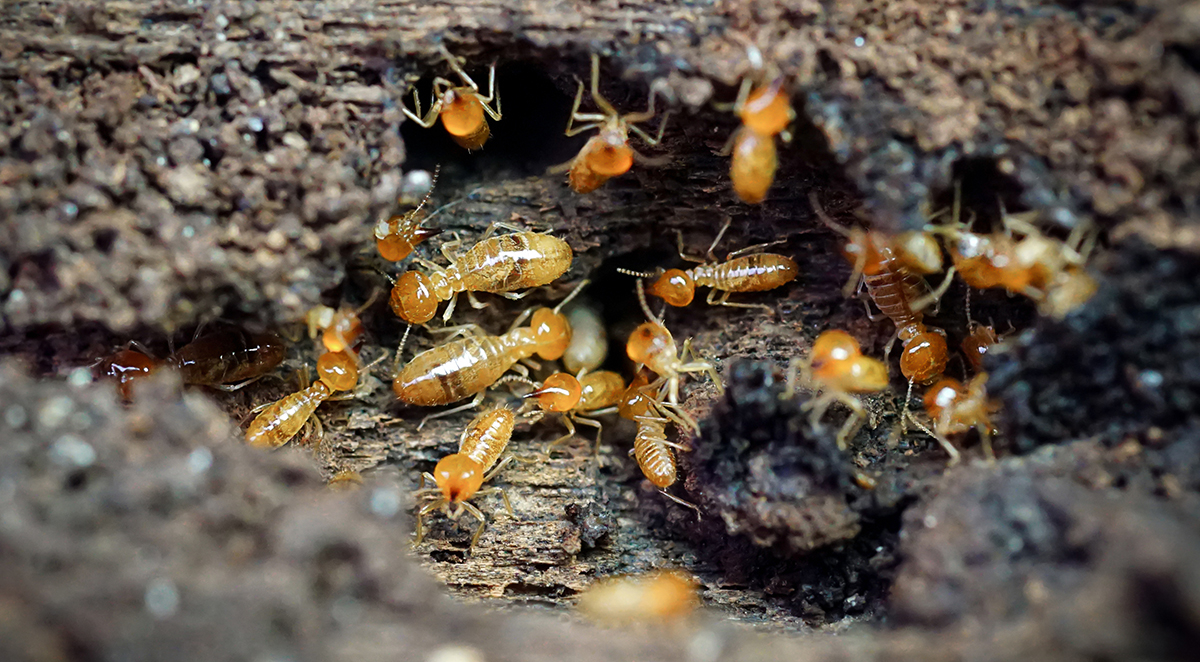
Drywood termite season in California peaks just as the rest of us settle into cooler evenings. Source Pest Control has served Riverside County and North San Diego County since 2011, and fall is one of our busiest stretches for termite calls. Knowing what a drywood termite swarm looks like, and how fast to act, can be the difference between a localized treatment and major structural repair.
Quick Summary
- Drywood termite swarming in Southern California peaks in September and October, making fall the season to watch for warning signs.
- Discarded wings on windowsills, pellet-like droppings, and hollow-sounding wood are the most common signs of drywood termites in local homes.
- Unlike subterranean termites, drywood termites need no soil contact, so they infest attics, eaves, window frames, and furniture.
- A swarm does not mean the infestation started this year. Colonies mature for several years before producing winged reproductives.
- Professional inspection is the only reliable way to confirm the species, locate colonies, and choose the right drywood termite treatment.
Why Fall Is Drywood Termite Season in Southern California
Most homeowners associate termites with spring. That association is not wrong, just incomplete. Spring rain followed by warm weather drives the subterranean termite swarms our technicians respond to from March through May. Drywood termites run on a different schedule, with reproductive flights clustered in fall.
The western drywood termite is the species most commonly found in Southern California homes. When a colony matures, it produces winged reproductives called alates, or swarmers, which leave to mate and start new colonies. In our region that flight usually happens on warm, calm afternoons and early evenings from September into October, sometimes extending into November depending on the weather.
What Triggers a Swarm
Fall swarming follows a predictable set of conditions:
- Warm daytime temperatures, often after a mild cooling trend
- Low wind, which makes flight possible for these weak fliers
- Late afternoon or dusk timing, when many species disperse
- A colony mature enough to produce reproductives, usually several years old
That last point matters most. If you see a drywood termite swarm at your home this fall, the colony behind it has almost certainly been established for years. The swarm is not the beginning of your problem. It is the announcement of one already underway.
How Drywood Termites Differ from Subterranean Termites
The distinction shapes everything about detection and treatment. Subterranean termites live in soil, need moisture and soil contact, and build the mud tubes many homeowners recognize along foundations and crawl space walls.
Drywood termites need neither. They colonize the wooden components of a structure directly, drawing moisture from the wood itself. That is why they are common in older homes throughout our service area, and why they turn up where subterranean termites never reach: attic rafters, roof eaves, fascia boards, window and door frames, hardwood flooring, and even furniture. With the colony living inside the wood, there are no mud tubes to spot, so detection depends on subtler signs.
Signs of Drywood Termites Around Your Home
Fall is the right time to walk your property with intention. Here is what our technicians look for, and what you can check yourself.
Termite Wings on Windowsills and Other Visible Clues
Discarded wings are the classic indicator. After swarmers land and pair off, they shed their wings, leaving small translucent piles wherever the insects were drawn to light. Windowsills, door thresholds, bathtubs, sinks, and spider webs near light fixtures are the usual collection points.
Beyond wings, watch for:
- Small piles of hard pellets resembling coarse sawdust or coffee grounds. Drywood termite frass is distinctive because the pellets are firm and six-sided rather than powdery.
- Tiny round kick-out holes, often no bigger than a pinhead, where termites push frass out of their galleries.
- Hollow-sounding wood when tapped along baseboards, window frames, or door casings.
- Bubbling, blistering, or uneven paint on wood surfaces.
- Maze-like patterns in exposed or damaged wood.
- Doors and windows that suddenly fit too tightly.
- Live winged insects near windows or exterior lights on warm fall afternoons.
Frass piles signal active feeding rather than a one-time flight. Sweep a pile away, then check the same spot a week later. Fresh accumulation means an active colony directly above.
Are Those Swarmers or Flying Ants?
Fall also brings winged ants, and homeowners mix the two up constantly. Three features separate them:
- Wings: termites have two pairs of roughly equal length extending well past the body, while ants have forewings noticeably longer than their hindwings.
- Waist: termites are broad and straight-sided with no obvious pinch, while ants have a sharply narrowed waist.
- Antennae: termite antennae are straight and slightly beaded, while ant antennae have a distinct bend.
If you are uncertain, save a few specimens in a sealed bag. Identification is much easier with an intact sample.
What to Do If You Find a Fall Swarm
Discovering a swarm is unsettling, but the response is straightforward:
- Do not spray the swarmers. Retail aerosols kill visible insects without touching the colony inside the wood, and they scatter evidence that helps locate it.
- Collect a sample of several intact insects or a pinch of the discarded wings in a sealed bag or jar.
- Photograph what you found and where, noting the room, the window or fixture, the date, and the time of day.
- Look for frass beneath and above the swarm site, then check adjacent rooms and, if accessible, the attic.
- Leave damaged wood alone. Intact galleries tell inspectors more about colony size and location.
- Schedule a professional inspection. A swarm confirms an established colony in or near your structure, and locating it takes trained eyes rather than guesswork.
Drywood Termite Treatment: What the Process Involves
Effective drywood termite treatment depends on where the colonies are and how far they have spread. Our approach follows three stages.
Meticulous inspection. Every plan begins with an evaluation that identifies the species present, locates colonies and activity areas, assesses existing damage, documents conducive conditions, and produces a detailed report.
Customized treatment strategy. Based on those findings, we build a targeted approach, which may include localized spot treatments for isolated activity, wood treatments to protect vulnerable structural elements, or preventative applications for at-risk areas. A single infested window frame calls for a very different plan than widespread attic activity.
Long-term protection. Treatment is not the end of the relationship. We provide monitoring for new activity, preventative maintenance, and recommendations for reducing the conditions that attract termites. You can read more on our termite control page.
One point deserves emphasis: termite damage is typically not covered by homeowner's insurance, and repair costs commonly run into the thousands. That gap is why we push so hard on early detection. If you are buying or selling this fall, we also provide Wood Destroying Organism inspections and reports, described further on our page for realtors.
Read our guide, “Is it worth it hiring a pest control company?”.
Fall Prevention Steps for Local Homeowners
Prevention will not eliminate risk in a region with year-round termite pressure, but it reduces vulnerability. Before the swarming window closes:
- Seal cracks, gaps, and joints in exterior wood trim, fascia, and siding where swarmers can enter.
- Repair or replace weathered, cracked, or damaged wood, which is easier to colonize.
- Keep exterior wood painted or sealed, since intact finishes act as a real barrier.
- Check attic spaces, eaves, and roof overhangs annually.
- Reduce outdoor lighting during peak swarm evenings.
- Store firewood away from the structure and inspect secondhand furniture before bringing it inside.
- Fix roof leaks and plumbing issues promptly, and schedule regular inspections even for newer homes.
Homeowners already on a residential pest control plan have an advantage here, because our technicians are on the property regularly and know what to watch for between formal termite inspections.
Frequently Asked Questions
When do termites swarm in Southern California?
It depends on the species. Subterranean termites typically swarm in spring, generally March through May, after rain and warming temperatures. Drywood termites swarm in fall, peaking in September and October across our service area. Southern California's mild climate supports year-round termite activity, so there is no true off-season for either species.
Does a swarm mean my house is already damaged?
Not necessarily, but it does mean a mature colony exists nearby. Colonies generally need several years to produce winged reproductives, so the activity predates the swarm you saw. Whether damage has reached a structurally significant level depends on colony size, location, and how long feeding has gone on. Only an inspection can answer that for your property.
Can I treat drywood termites myself?
We do not recommend it. Retail products reach the surface of the wood, while drywood termite colonies live in galleries deep inside it. Killing visible swarmers does nothing to the colony and often delays a real solution by months or years. Professional treatment requires identifying the species, locating the colonies, and matching the approach to the activity. Read our blog on DIY vs. Hiring a Professional.
I found wings but no live insects. Should I still call?
Yes. Discarded wings on a windowsill are meaningful evidence on their own, since swarmers shed them after landing. No live insects simply means the flight already happened. The colony that produced them is still active somewhere.
Do newer homes need termite inspections?
Yes. Newer construction may use some termite-resistant materials, but it is not immune. Without ongoing protection, even new homes can become vulnerable within a few years.
Do Not Let This Fall's Swarm Become Next Year's Repair Bill
Drywood termites work quietly inside wood for years before producing the swarm that finally gets a homeowner's attention. The wings on your windowsill are an opportunity, not just bad news. You found the problem while a targeted response is still possible.
Source Pest Control has been locally owned and operated since 2011, serving Riverside County and North San Diego County, including Temecula, Murrieta, Menifee, Fallbrook, Lake Elsinore, Wildomar, Winchester, Oceanside, and Carlsbad. Our technicians are licensed and experienced in termite identification and control, and we know the pressures specific to our region. See our full coverage on the service area overview.
If you have spotted wings, frass, or winged insects this fall, do not wait for the damage to reveal itself. Contact us to schedule a termite inspection, or call (951) 401-1318. We are available Monday through Friday, 7:30 AM to 6:00 PM, and Saturday, 9:00 AM to 4:00 PM.