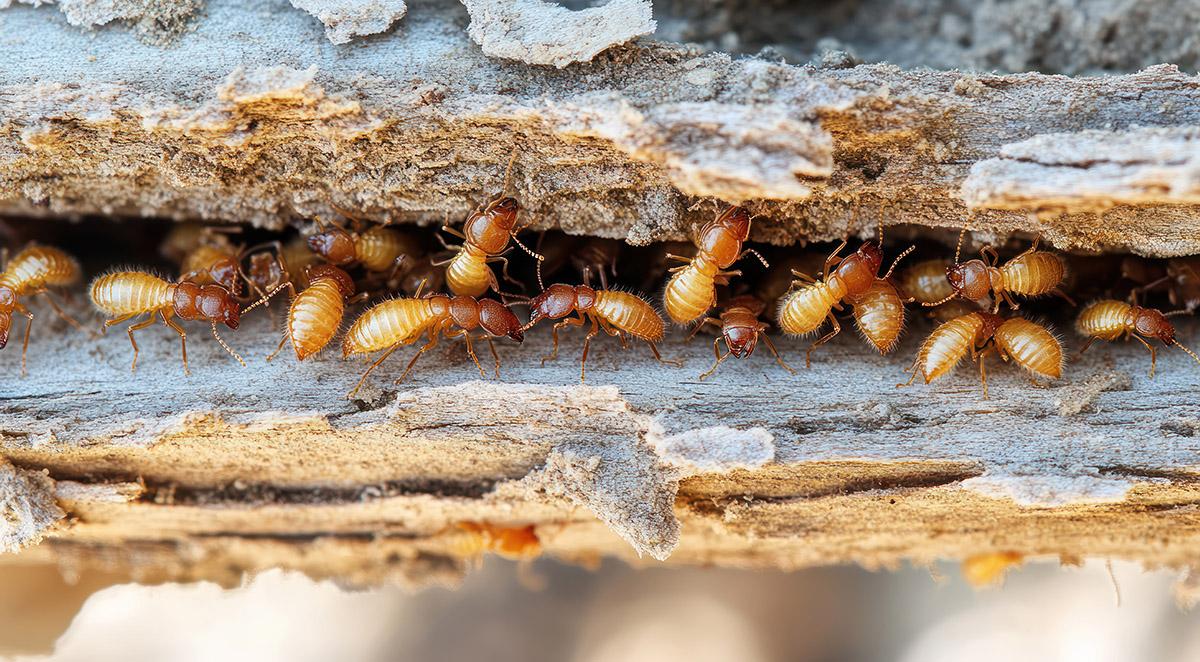
If you've ever stepped outside on a warm spring evening after a rain and noticed a cloud of small, winged insects hovering near a porch light or window, you may have witnessed a termite swarm in action. For homeowners across Riverside County and North San Diego County, termite swarming season is a time of year to stay alert because this could be the first visible sign of a serious infestation hiding inside your walls.
At Source Pest Control, we've been helping local homeowners identify and address termite threats since 2011. In this guide, we'll walk you through everything you need to know about termite swarming season, from what triggers a swarm to how you can protect your home before damage occurs.
What Is Termite Swarming?
Termite swarming is a natural reproductive event in which mature termite colonies release winged termites, called alates or swarmers, into the air to mate and establish new colonies. These swarmers are the only termites most homeowners will ever see with the naked eye, since worker and soldier termites stay hidden inside wood and underground.
A single colony can release hundreds or even thousands of swarmers at once. After a brief flight, the swarmers shed their wings, pair off, and search for a suitable location to start a new colony. While most swarmers don't survive to establish a colony, the ones that do can begin causing structural damage to a new property relatively quickly.
Swarming signals that a colony has been present and thriving long enough to reach maturity, which typically takes several years. That's why spotting swarmers near or inside your home is a warning sign that shouldn't be ignored.
When Does Termite Swarming Season Occur in Southern California?
One of the unique challenges of living in Southern California is that our mild climate supports termite activity year-round. However, swarming events tend to follow seasonal patterns depending on the species involved.
- Subterranean termites typically swarm in spring, between March and May, often triggered by a combination of warm temperatures and rainfall. A stretch of rainy days followed by a sunny, humid afternoon creates the ideal conditions for a swarm.
- Drywood termites tend to swarm later in the year, with peak activity occurring in September and October during the fall months. These swarms often happen on warm, calm evenings.
Because our region faces pressure from both subterranean and drywood termite species, homeowners in areas like Temecula, Murrieta, Menifee, Fallbrook, and Lake Elsinore should remain vigilant across multiple seasons, not just in spring.
Read our blog about year-round termite threats and why even winter inspections matter.
How to Identify a Termite Swarm
Not every swarm of flying insects is a cause for alarm. Many homeowners confuse termite swarmers with flying ants, which also swarm during warm weather. Knowing the difference can save you time and stress—or help you act quickly when it matters most.
Termite Swarmers vs. Flying Ants
Here's how to tell them apart:
- Body shape: Termite swarmers have a straight, broad waist, while flying ants have a pinched, narrow waist similar to regular ants.
- Wings: Termite swarmers have two pairs of wings that are equal in length and extend well beyond the body. Flying ants have two pairs of unequal length, with the front wings noticeably longer than the back.
- Antennae: Termite antennae are straight or gently curved. Ant antennae are distinctly elbowed.
- Color: Termite swarmers are usually dark brown to black. Flying ants may vary in color depending on species.
If you're unsure what you're looking at, a quick photo and a call to a licensed pest control professional can help you get a definitive answer.
Warning Signs of Termite Activity Around Your Home
Swarming is just one indicator that termites may be present. Even outside of swarming season, there are several signs homeowners should watch for that suggest termite activity in or near the structure:
- Discarded wings near windowsills, doors, or light fixtures—often the first visible evidence after a swarm
- Mud tubes along foundation walls, crawl spaces, or basement walls, which subterranean termites build to travel between their colony and food sources
- Hollow-sounding wood when tapped, indicating internal damage
- Tight-fitting doors and windows caused by moisture from termite activity warping the wood
- Small piles of frass (termite droppings) that resemble tiny pellets or sawdust, commonly left behind by drywood termites
- Bubbling or uneven paint on wood surfaces
- Maze-like patterns visible in exposed or damaged wooden structures
If you notice any combination of these signs, it's important to schedule a professional termite inspection promptly. Early detection is one of the most effective ways to limit damage and reduce the cost of treatment.
Read all about our termite control work here.
Why Termite Swarming Season Matters for Homeowners
It's easy to dismiss a brief swarm as a one-time event, but swarming carries real implications for your property. Here are the key reasons homeowners should take swarming seriously:
- Swarmers indicate an established colony nearby. If termites are swarming in or very near your home, it likely means a mature colony has been present—possibly for years—and may already be causing damage you can't see.
- New colonies can form on your property. Even if the swarm didn't originate from your home, swarmers that land on or near your property can establish new colonies in favorable conditions.
- Termite damage is typically not covered by homeowner's insurance. Because termite infestations are considered a maintenance issue rather than sudden damage, most standard homeowner's insurance policies exclude termite damage from coverage. The financial burden of repairs falls directly on the homeowner.
- Repair costs add up quickly. The average termite damage repair cost can run into thousands of dollars, especially when infestations go undetected for extended periods. Structural wood, flooring, and even wallpaper can all be compromised.
- Southern California's climate keeps the threat active year-round. Unlike regions with harsh winters that naturally slow termite activity, our mild temperatures in Riverside County and North San Diego County mean termites can feed and cause damage continuously, with no true off-season.
Termite Species You Should Know About
Understanding the types of termites in our area can help you better recognize threats and understand the treatment approaches that may be recommended.
Subterranean Termites
Subterranean termites are ground-dwelling insects that build their colonies in soil and construct distinctive mud tubes to access above-ground food sources. These tubes protect them from dry air as they travel between their underground colony and the wood they're consuming. Subterranean termites cause the most structural damage of any termite species in the United States and are prevalent throughout the Riverside County and North San Diego County service area.
Drywood Termites
Unlike subterranean termites, drywood species don't require contact with soil. They can establish colonies directly inside the wooden components of your home—framing, furniture, trim, and more. Drywood termites are common throughout Southern California, particularly in older homes, and their swarming activity peaks during fall months. Their droppings, or frass, often appear as small pellets near infested wood and are one of the most recognizable signs of their presence.
What to Do If You See Termite Swarmers
Discovering a swarm can be alarming, but staying calm and taking the right steps can make a significant difference. Here's what to do:
- Don't panic or try to spray them. Over-the-counter sprays may kill individual swarmers on contact, but they won't affect the colony that produced them. Spraying can also scatter the evidence that a pest control professional needs to assess the situation.
- Collect a sample. If possible, capture a few swarmers in a plastic bag or jar. This helps with accurate species identification.
- Note the location. Record exactly where you saw the swarmers emerging—near a window, along a foundation wall, from a crack in the ceiling. This information helps technicians focus their inspection.
- Save any discarded wings. Piles of shed wings are useful evidence, so avoid sweeping them up before your inspection.
- Contact a professional termite inspector. A licensed technician can perform a thorough evaluation of your property to determine whether the swarm originated from an existing infestation or from an external colony nearby.
How Source Pest Control Addresses Termite Threats
When you contact Source Pest Control about a termite concern, our approach is thorough and tailored to your property's specific needs. Our professional termite control process follows a proven framework:
Step 1: Meticulous Inspection
Every effective termite management plan begins with a comprehensive evaluation. Our licensed technicians will identify the termite species present, locate colonies and activity areas, assess the extent of any existing damage, determine moisture issues or other conducive conditions, and create a detailed inspection report.
Step 2: Customized Treatment Strategy
Based on our findings, we develop a targeted treatment approach. Depending on your situation, this may include localized spot treatments for isolated issues, advanced baiting systems designed to eliminate entire colonies, comprehensive soil treatments to create protective barriers, preventative applications for at-risk structures, and wood treatments to protect vulnerable structural elements.
Step 3: Long-Term Protection
Our service doesn't end with treatment. We offer regular monitoring for new activity, preventative maintenance to help avoid future infestations, documentation for real estate transactions, and recommendations for reducing attractants around your property.
Tips to Reduce Your Home's Termite Risk
While professional treatment is the most reliable way to address an active infestation, there are proactive steps homeowners can take to make their property less attractive to termites:
- Eliminate wood-to-soil contact around your foundation, including fence posts, deck supports, and stored firewood
- Fix leaks and improve drainage to reduce moisture near your home's foundation, since subterranean termites are drawn to damp soil
- Keep gutters clean and ensure downspouts direct water away from the structure
- Store firewood at least 20 feet from your home and keep it elevated off the ground
- Trim vegetation so that shrubs and trees don't create moisture-trapping contact with your home's exterior walls
- Seal cracks and gaps in your foundation, as termites can enter through openings as small as 1/32 of an inch
- Schedule regular professional inspections, especially if your home is older or located in a high-pressure area
Frequently Asked Questions
How can I tell if I have termites?
Warning signs include mud tubes on foundation walls, discarded wings near windows and doors, hollow-sounding wood, bubbling or uneven paint, and frass (termite droppings) that resemble small pellets or sawdust. If you notice any of these signs, contact us immediately for a professional inspection, as early detection can prevent extensive damage.
How do termites get into homes?
Termites enter homes through cracks in foundations as small as 1/32 of an inch, through wood-to-soil contact, around utility penetrations, and via mud tubes they construct to bridge gaps. They can also be introduced through infested furniture or firewood. A professional inspection can identify these vulnerable access points on your property.
Is termite treatment safe for my family and pets?
Yes. Modern termite control methods prioritize safety while effectively targeting termites. At Source Pest Control, we use products specifically designed for termite management that, when applied by our trained professionals according to label instructions, pose minimal risk to people, pets, and the environment. We'll explain all safety protocols specific to your treatment plan.
How long does termite treatment last?
Treatment longevity depends on the method used, environmental factors, and your property's specific situation. Liquid treatments typically provide protection for five to ten years, while bait systems require ongoing monitoring and maintenance. We offer maintenance programs to ensure continuous protection and early detection of any new activity.
Do I need a termite inspection before selling my home?
Wood Destroying Organism (WDO) inspections are often required during real estate transactions. Source Pest Control offers professional WDO inspections that provide documentation of current termite activity, evidence of previous infestations and treatments, assessment of conducive conditions, and clear recommendations for necessary treatments. If you're preparing to buy or sell a home, our real estate services can help ensure a smooth transaction.
Protect Your Home Before Swarming Season Arrives
Termite swarming season is a critical reminder that these destructive insects are always at work, often long before homeowners ever notice. In Southern California's year-round termite climate, proactive prevention and early detection are the best defenses you have.
Source Pest Control has been a trusted, locally owned partner for homeowners throughout Riverside County and North San Diego County since 2011. Our licensed technicians understand the specific termite pressures affecting properties in our region, and we're committed to providing long-term solutions. Don't wait for a swarm to tell you what's already happening inside your walls. Contact Source Pest Control today to schedule a professional termite inspection and take the first step toward protecting your home.