

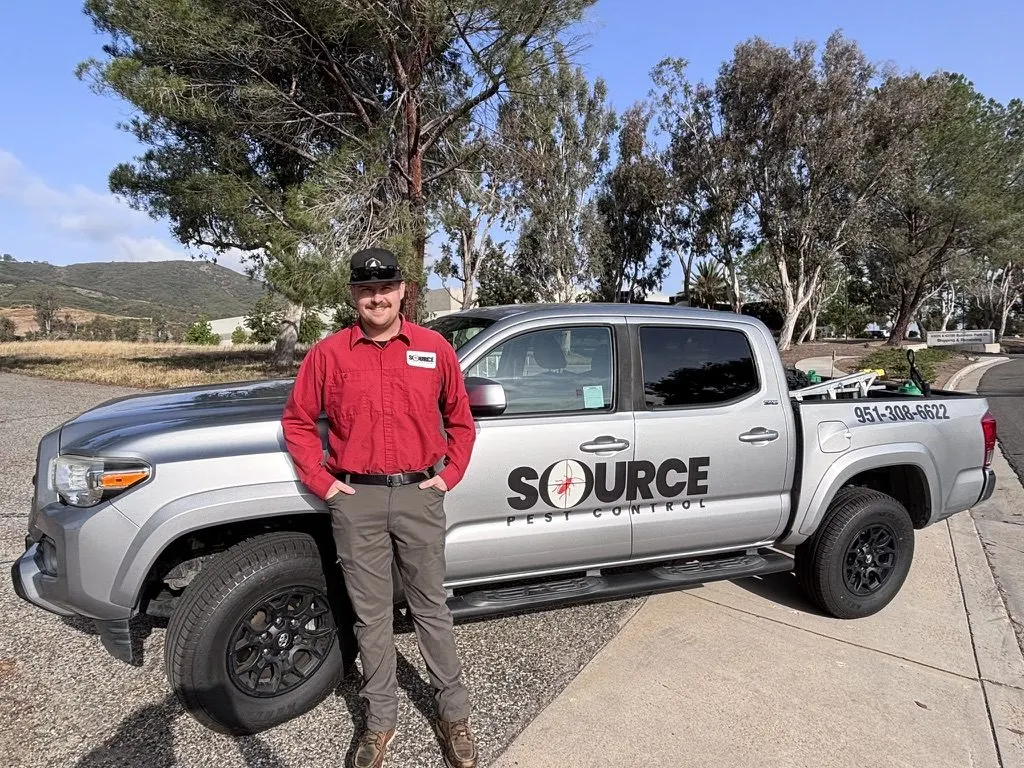
If you want to know whether termites are in your house, book the free termite inspection. If a buyer, lender, escrow officer or agent is asking for paperwork, you need the WDO report, which costs $99 at Source Pest Control. Both start with the same walk-through by inspector Tyler Williams.
Key takeaways
- A termite inspection on a home that isn't being sold is free, including yearly checks.
- A WDO report for a home sale or refinance is $99. It follows the format set by California's Structural Pest Control Board and goes to the parties named in the purchase contract.
- "Termite report," "termite letter," "pest report" and "termite clearance" almost always mean the WDO report.
- Any Section 1 work found on either visit is quoted separately, and you can hire any licensed company to do it.
What's the difference between a termite inspection and a WDO report?
Tyler checks the same parts of the house either way. The difference is the document.
With the free inspection, you get an answer. Tyler tells you what he found, separates active termites from old damage, and points out conditions that could invite termites later. Nobody else needs a copy.
A WDO (wood destroying pests and organisms) report is a formal document on California's own form, 43M-41. It includes a diagram of the structure, a list of what was inspected and what couldn't be reached, and every finding sorted into Section 1 or Section 2. Lenders and escrow officers rely on it, so it carries a fee.
| Free termite inspection | $99 WDO report | |
|---|---|---|
| Who it's for | Homeowners who want to know if there's a problem | Sales, refinances, lenders, escrow |
| Cost at Source | Free | $99 |
| What Tyler checks | Accessible exterior, interior, attic and subarea | Same areas |
| What you get | Findings explained in person | State-format report with diagram and Section 1 and 2 findings |
| Who receives it | You | Parties named in the purchase contract |
| When to book | Any time you see signs, or once a year | As early in escrow as you can |
Which one should you book?
Most people can sort themselves in a few seconds:
- Selling in the next 90 days? Book the WDO report. Section 1 work takes time to schedule, and you don't want it landing in the last week of escrow.
- Buying, and the lender or your agent asked for a termite report? That's the WDO report.
- Refinancing, and the lender added a termite condition? Also the WDO report.
- Saw winged insects inside, or small pellets on a window sill? Book the free inspection.
- Owned the house for years and never had it checked? Free inspection.
- Not sure? Ask whoever is requesting it whether they need a "WDO report." If yes, it's the $99 report.
When you call, tell Jenni whether the house is in escrow. That one answer decides which visit she schedules.
What does Tyler check on either visit?
Every visit covers the accessible areas of the structure:
- Exterior wood trim, fascia, eaves and patio covers
- Garage framing
- Interior baseboards and door frames
- Bathrooms and kitchens, where leaks feed fungus and dry rot
- The attic, and the subarea or crawl space where the house has one
He looks for drywood and subterranean termites, fungus and dry rot, wood-boring beetles, and moisture problems. Anything he can't reach, such as a packed garage corner, is recorded as inaccessible, and on a WDO report that list is part of the paperwork. The signs of termites guide shows what to look for before you call.
What happens after a Section 1 finding?
Every WDO report splits findings into two groups:
- Section 1 is evidence of active infestation or infection, or damage caused by it. Live drywood termites in a fascia board are a Section 1 item.
- Section 2 is a condition likely to lead to infestation, with no evidence of one yet. Wood touching soil or a slow leak under a sink are typical examples.
Section 1 corrections are quoted separately. Dylan Reed handles Source's termite treatment, but you can hire any licensed company. Once the Section 1 items are corrected, a completion notice is issued, which is what most agents mean by "clearance." It doesn't cover Section 2 items or future termites.
Who pays for Section 1 work is negotiated between buyer and seller. The complete guide to WDO inspections covers escrow timing and payment, and termite control explains the treatment options.
Why do agents and lenders mix up the terms?
Because the industry uses five names for two things. "Termite letter" and "termite clearance" aren't official terms in California. Some lenders, especially on VA and FHA loans, ask for a national form called the NPMA-33. The Structural Pest Control Board says the state WDO report supersedes it in California, and an inspector may attach a completed NPMA-33 when a lender wants one.
Escrow requests come in from across Source's 20 cities, from Hemet to Carlsbad, and the process is the same everywhere.
The short answer
Source Pest Control keeps this simple: a termite inspection is free, and a WDO report for a sale or refinance is $99. If someone in your transaction is asking for paperwork, book the report, and book it early. Source is rated 4.9 from more than 1,100 Google reviews. Call (951) 709-0206, Monday to Saturday, 8am to 6pm, or send the form and tell Jenni whether the house is in escrow. Details are on the termite inspection page.
Common questions
Is the termite inspection free, or is there a catch?
It's free, yearly checks included, on any home that isn't in escrow. You pay only for treatment you agree to, or for a WDO report if a sale or refinance needs one.
How much is a WDO report for a home sale or refinance?
$99. Section 1 corrections, if any, are quoted separately after the report.
Who gets a copy of the WDO report?
The parties named in the purchase contract. That usually means the buyer, the seller and their agents, and escrow passes it to the lender.
Do I have to use Source for Section 1 repairs?
No. Any licensed company can do them. If Source does the work, Dylan Reed handles the treatment.
Does a WDO report guarantee there are no termites?
No. It reports what was visible and accessible on the day and lists what couldn't be reached. It isn't a warranty against termites arriving later.