

Ant Control in Temecula, Murrieta and North County
Ant control for Argentine ants, carpenter ants and fire ants in Temecula, Murrieta and the cities around them. Our 13-person team identifies the ant before treating, because the trail on the counter and the big black ant on the patio cover need different work, and the inspection and estimate are free.
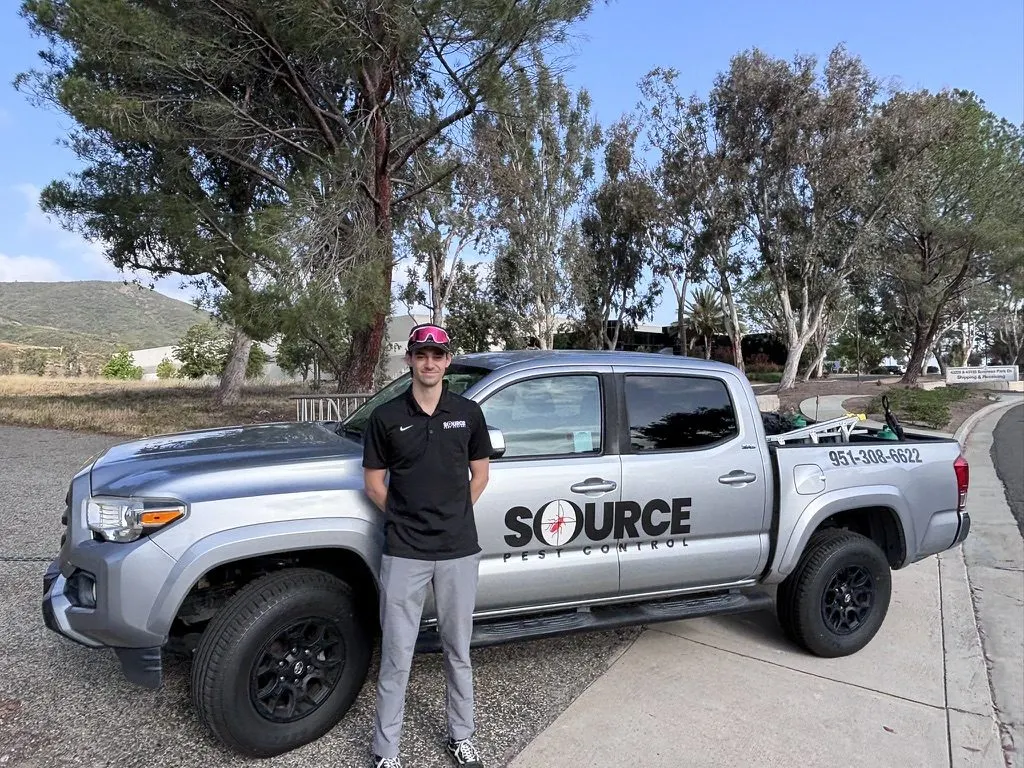
Ants are one of the four pests we're called about most, and in Temecula, Murrieta and the 18 more cities we serve, the ant on the kitchen counter is the Argentine ant in most homes. UC IPM's advice for it is slow-acting bait the workers carry back to the colony, and that's where our conversation with you starts.
What's included
Argentine ants, the common kitchen trail
Because Argentine ant colonies are large and connected, as UC IPM describes them, control works on the colony itself and the workers on the counter are only the visible part. UC IPM's advice is slow-acting bait the workers carry back to the queens and brood, plus closing the paths into the house. Ask the technician what your treatment will involve and where the bait will go.
Carpenter ants
Carpenter ants are the big black or black and red ants that nest in damp or decayed wood: a patio cover that leaks, a window frame that stays wet, a fence post sitting in soil against the house. Control means finding the nest and the moisture that invited it. The nest gets treated, and the wet wood then needs drying out or replacing.
Fire ants and mound ants
Red imported fire ants are established in parts of Southern California, and their mounds in lawns, planters and along sidewalks are a hazard for children and pets because the ants sting in numbers. Fire ant control in general pairs bait spread around the mounds with treatment of the mounds themselves, so the colony declines instead of relocating a few feet over. If you've been stung at a mound in your yard, say so when you call.
Entry points found and shown
Ants come in at the weep screed, the slider and window tracks, the gaps around hose bibs and gas lines, the base of the stucco and under the garage door seal. Ask the technician to point them out, along with the branch resting on the roof or the vine that gives the ants a bridge over the top. Sealing the ones you can reach is part of the fix, and a tube of caulk handles most of them.
Ant control on a plan
On a Monthly, Every Other Month or Quarterly plan, a technician is back on a schedule, and the quarterly visit lands ahead of the summer push and the winter rain push. The aim is to stay ahead of the ants instead of chasing them around the kitchen. If a trail shows up between visits, call (951) 535-4220 and the technician returns at no charge.
How it works
Call and tell us where the ants are
Call (951) 535-4220 Monday to Saturday 8am to 6pm, or send the form. Tell Jenni which rooms, whether they're on food, water or the pet bowl, when it started and what you've already sprayed, because a sprayed trail changes where the colony moves next. If you can, take a photo of the ants to show the technician.
Identify the ant and show the trail
The technician confirms whether it's Argentine ants, carpenter ants, fire ants or something else. Show him where you've seen the trail and where you think it comes in: the weep screed, a slider track, a hose bib, the block wall footing or the mulch line are the usual spots. Ask about anything he found before the treatment starts.
Give the bait time
If bait is part of the treatment, it works over days. The workers feed on it and carry it back to the queens and brood, so the colony declines gradually. That's why you may still see ants for a short while, and why spraying the trail yourself during that time undoes the work. Ask where any bait will go and how it's kept out of reach of kids and pets.
Ask what's applied and where
Ask the technician what's being applied outside and where. Every product goes down according to its label, which sets how long children and pets stay off a treated area, so the technician gives you that time before he leaves. If you'd rather nothing be applied inside, say so at booking and ask what that means for the treatment.
Keeping them out
These are the things that bring the colony back: the drip at the hose bib they drink from, the pet food left out overnight, the branch on the roof, the mulch piled against the stucco and the gap under the garage door. Fix the ones you can, and on a quarterly plan a technician is back every three months to catch the rest.
More about ant control
If you have a line of small dark ants running along the kitchen counter, up the side of the dog's bowl or across the bathroom floor, you most likely have Argentine ants. They're the ant that took over Southern California, and UC IPM describes them as large connected colonies with many queens, which is why they behave so differently from the ants most of us grew up with. There's no single nest to dig up. The colony runs under the sidewalk, along the footing of the block wall, under the mulch and the pavers and on into the neighbor's yard, and the trail in your kitchen is one branch of something much bigger. They push indoors twice a year in this valley. In the hot, dry summer months they come in looking for water, and after the first heavy winter rain the flooded soil drives them up into the house. Spraying the trail you can see kills the workers in reach while the rest of the colony sends workers in another way, which is why the can under the sink never seems to end it. If you've sprayed three times and the trail keeps moving, that's the colony at work, and it's the reason we start with a different approach.
What ends it, in UC IPM's advice, is bait. A slow-acting bait that the workers feed on and carry back to the queens and brood makes the colony itself decline instead of just moving the trail over a foot. Finding where the trail comes in matters as much, and around here that's usually the weep screed at the base of the stucco, a slider track, the gap around a pipe or the seam where the garage slab meets the wall. We'll tell you what your treatment involves, inside and out, and where any bait goes. Mention kids and pets when you book, and the technician will say how long to keep them off anything treated, because that time comes from the product label and we follow the label on everything we apply. Every technician on our team is licensed through the State of California. We also move quickly on ants, because a trail in July gets worse by the day. When Gabby K. called us about an ant invasion, we were at her house the next day, and same-day visits happen when the schedule allows.
Not every ant is an Argentine ant, and we check before we treat. Carpenter ants are much larger and nest in damp or decayed wood, so a carpenter ant trail means looking for the moisture that let them in, such as a patio cover that leaks or a window frame that never dries out. Red imported fire ants are established in parts of Southern California and build mounds in lawns and planters, and their stings are the reason to deal with a mound before the kids find it. Odorous house ants and pavement ants turn up too. Jared Brown has 27 years in pest control and has worked every position in the industry, and on an ant job the listening matters, because where you're seeing them, when it started and what you've already sprayed all change the plan. From our office in Murrieta we cover 20 cities in Riverside County and North San Diego County. Call (951) 535-4220 Monday to Saturday 8am to 6pm, and Jenni Lara will book the next open slot for your address.
What do people ask about ant control?
How do I get rid of Argentine ants in my house?
Bait the colony and close the way in. Argentine ants live in large connected colonies with many queens, so the trail in your kitchen is one branch of a colony that runs under the yard and into the neighbor's. UC IPM's advice is slow-acting bait placed at the trails, which the workers carry back to the queens and brood so the colony declines over days. Spraying the trail only moves it to another room.
Is one ant treatment enough, or do I need a plan?
One treatment deals with the trail you have now, and a plan is for homes where the ants keep coming back. Argentine ant colonies run across yards and into the neighbor's, so new workers can trail in with the next hot spell or heavy rain. A visit every three months puts a technician at the house ahead of those pushes, and if ants trail back in between visits, we come back out at no charge. Ask Jenni which fits your home.
I sprayed the ants and now there are more. Why?
Spraying the visible trail kills the workers you can see, and the colony keeps sending workers out on new paths, so you see trails in two rooms instead of one. The spray also keeps the workers away from any bait, which is the tool that reaches the queens. If you've already sprayed, tell the technician where, so he can plan around it.
Are these carpenter ants, and are they eating my house?
Carpenter ants are far larger than Argentine ants, black or black and red, and you tend to see one or two at a time instead of a dense trail. They don't eat wood the way termites do. They hollow out damp or decayed wood to nest in, so a carpenter ant in the house points to moisture: a leaking patio cover, a wet window frame, a post in soil. Finding the nest and the leak behind it is the job.
What about my kids and pets during ant treatment?
Tell us about kids and pets when you book. Before he leaves, the technician explains where any bait went and what to do next, including the wait before kids and pets go back on treated ground, because the product label sets that wait. When families ask about the products themselves, we tell them what we use carries labels for hospital and daycare use.
How long does ant control take to work?
Bait works over days, because the workers have to carry it back to the queens and brood before the colony declines. You'll see ants on the bait and possibly a few more trails for a short while after the visit, which is the bait doing its job. Ask the technician what to expect for your home, and call us if the trails are still heavy after that stretch.
Do you treat ants in Menifee, Wildomar and Lake Elsinore?
Yes. We handle ants in all 20 cities we serve, including Menifee, Wildomar, Lake Elsinore, Canyon Lake, French Valley and Winchester, and the San Diego County cities between Fallbrook and Carlsbad. Argentine ants trail indoors in hot dry weather and after rain across the whole area, as UC IPM describes, so the same advice applies wherever you live. Call (951) 535-4220 and tell Jenni your city.
Seeing pests? Tell us what and where.
4.9 1,111 Google reviews- Monday to Saturday 8am to 6pm
- 20 cities served from Murrieta
- Free inspections and estimates
- Plans starting at $45 a month
Get a Free Quote
Request received.
We will call you shortly to confirm. Need us sooner? Call (951) 535-4220.
That did not send.
Something went wrong on our side. Please call so we do not miss you.
Call (951) 535-4220Rather talk now? (951) 535-4220