

Flea control in Temecula, Murrieta and North County
Flea treatment for homes and yards in Temecula, Murrieta and North County. Our 13-person team treats the carpets, the pet's resting spots and the shaded yard where flea larvae develop, while your vet treats the dog or cat itself, because both halves have to happen in the same week for the fleas to stay gone.
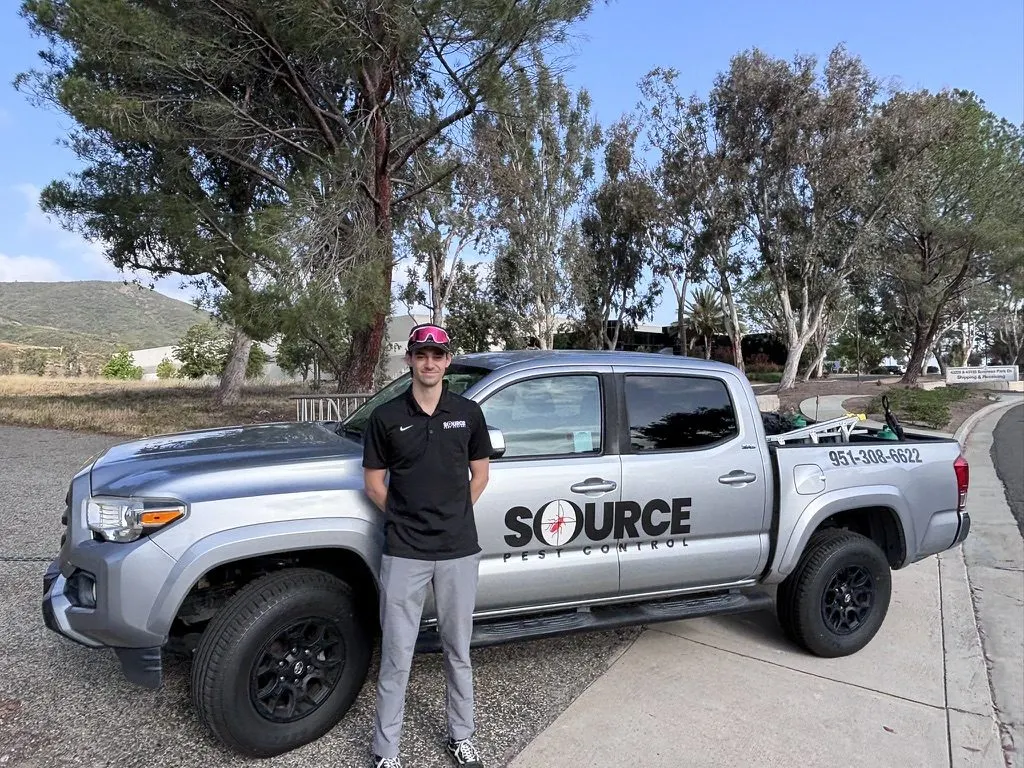
We treat the house and the yard for fleas across Temecula, Murrieta and 18 more cities, while your veterinarian treats the dog or cat itself, and the two have to happen together. Our technicians treat carpets, pet resting areas and the shaded yard spots where flea larvae develop, and the inspection and estimate are free.
What's included
Interior treatment where larvae develop
The technician treats the carpets, rugs, the floor under and around furniture, the pet's bedding area, the base of the couch and the gaps along baseboards with a product labeled for fleas indoors. Flea larvae live down in the fibers and the dust, well below the surface, so the treatment targets where the pet rests and where it walks through the house every day.
Yard treatment in the shaded spots
Outdoors, flea larvae survive only in shade and moisture. The technician treats under the deck, beneath the hedges and shrubs, the dog run, the dusty patch under the patio table and the soil along the north side of the house where the dog digs in to stay cool. Open, sunny lawn in a Temecula summer kills larvae on its own, so the treatment goes where they can live.
Coordination with your vet
Treating the animal is your veterinarian's job. The home and yard treatment works best lined up with the vet's treatment, because adults keep hatching from eggs already in the carpet for a couple of weeks, and the pet is what they jump onto. Book the vet visit for the same week as the home treatment so both halves happen together.
The preparation list
Before the visit: vacuum every carpet and rug and the furniture, empty the vacuum outside, wash the pet bedding in hot water, pick up toys and clothes off the floor so the technician can reach every surface, and cover the fish tank. Vacuuming matters because it pulls up larvae and makes the hidden pupae hatch, where the treatment can reach them.
Follow-up and what to expect
You'll see fleas for a while after the treatment because pupae already in the carpet keep hatching for 1 to 2 weeks, and the product deals with them as they emerge. The technician explains that so nobody panics on day 5. Keep vacuuming daily during that stretch. If activity is still heavy after the hatch-out period, call (951) 535-4220 and tell us what you're seeing and in which room.
How it works
Call and tell us about the pet and the house
Call (951) 535-4220 and tell Jenni how many pets you have, whether they've been to the vet, which rooms the pet uses most and whether you're seeing fleas on people or in a particular room. That decides how much of the house and yard the technician plans to treat. She'll book a time Monday to Saturday between 8am and 6pm, and if there's room in the schedule that can be the same day.
Prepare the house
Vacuum everything, including under cushions and along baseboards, and put the bag or canister contents in the outside trash. Wash the pet's bedding in hot water. Clear the floors so every carpet and rug is reachable. Arrange to have the pet treated by the vet the same week. The better the preparation, the faster the fleas are gone, and the technician will tell you plainly if a room isn't ready.
Inspection and treatment
The technician walks through the house and the yard, confirms where the pet rests and where the fleas are concentrated, and applies a product labeled for fleas to the carpets, rugs, furniture bases, baseboard gaps and pet areas inside, and the shaded soil and dog run outside. He holds a State of California licence and follows the label on everything he applies.
The hatch-out period
Ask the technician before he leaves what to expect and when the treated rooms are ready to use again. Over the next 1 to 2 weeks pupae already in the carpet keep hatching, and you'll see some fleas as they emerge and meet the treatment. Keep vacuuming daily and keep the pet on its vet treatment through that stretch, because the two together are what break the cycle.
Check in after the hatch-out
After the hatch-out period the fleas should be gone. If you're still seeing steady activity, call (951) 535-4220 and tell us what you're seeing. The usual causes are a room the pet uses that wasn't mentioned, a second animal that wasn't treated by the vet or a shaded corner of the yard where the dog sleeps that nobody pointed out on the day.
More about flea control
The flea you're dealing with is most likely the cat flea, whatever pet it's on. UC IPM identifies the cat flea as the most common flea in California and notes that, despite the name, it bites dogs, cats and people. UC IPM also reports that flea populations surge in spring and early summer, which is when flea problems build in Murrieta, Temecula, Menifee and Wildomar, though a warm house keeps them going all year. The part most people miss is that the adult fleas on the pet are a small share of the problem. The eggs fall off the animal wherever it rests, and the larvae develop in carpet fibers, under the couch cushions, in the pet bed, in the gap under the baseboard and outside in the shaded, dusty soil under the deck or the hedge where the dog naps in the afternoon. Treating the pet alone leaves all of that in place, which is why fleas seem to come back a week later. The same goes for a flea bomb from the hardware store, which reaches the open carpet and misses the fibers, the cushions and the yard.
We handle the house and the yard, and we'll be clear about what we don't do: the treatment on the animal itself belongs with your veterinarian. UC IPM's advice is to control fleas on the pet and clean and treat the areas where the pet rests, and that's exactly the division of work. A flea job has three parts for us. The inspection comes first, to confirm where the pet rests and where the fleas are concentrated. Then a product labeled for fleas goes down, applied by a licensed technician where the fleas develop, inside and out. Then you get plain instructions on what to do next, because the preparation you do and the vacuuming you keep up afterward decide how fast it ends. Jared Brown, our owner, has 27 years of pest control behind him, and his team explains the job in full before the work starts, which matters here more than on most jobs, since you'll be doing part of it yourself for a couple of weeks.
We work out of 29990 Technology Dr Ste 13 in Murrieta, serving 20 cities, including Perris, Moreno Valley, Riverside, Hemet, Corona and San Marcos. Fast response is why customers tell us they chose us, and a flea problem is one where a quick start matters because every day adds more eggs to the carpet. Call (951) 535-4220 Monday to Saturday 8am to 6pm and Jenni will get you booked. Give her a sense of how many pets you have, whether they've been to the vet yet and which rooms they use most. Get the pet booked in with your vet for the same week too, because UC IPM's advice is to treat the pet and the places it rests together, and a treated house with an untreated dog is soon back where it started. If you've already tried a spray or a fogger, say so, because that changes what the technician expects to find.
What do people ask about flea control?
Do I still need to treat my dog or cat if you treat the house?
Yes. UC IPM's advice is to control fleas on the pet and treat the areas where the pet rests, and both halves are needed. We treat the house and the yard, and your veterinarian treats the animal. If the pet isn't treated, fleas hatching from eggs already in the carpet jump straight back onto it and the cycle restarts. Book the vet visit for the same week as the home treatment so the two line up.
Why do I have fleas when my pet is on flea medication?
Because the eggs, larvae and pupae are in your carpet, furniture and yard, away from the pet and its medication. The ones developing in the carpet fibers and the shaded soil under the deck keep hatching for weeks. UC IPM notes the cat flea bites people as well as dogs and cats, so those new adults bite you while they wait for the pet. The home and yard treatment ends that supply.
I don't have pets. Why do I have fleas?
The previous occupants or their pets, a stray cat that sleeps under the deck or wildlife passing through the yard are the usual explanations. UC IPM notes the cat flea bites people, and pupae can sit dormant in an empty home and hatch when someone moves in and the vibration and warmth set them off. The technician checks the yard as well as the house to find the source.
How long after the treatment will I still see fleas?
1 to 2 weeks, and that's expected. Pupae already in the carpet are protected inside their cocoons and keep hatching after the treatment, and the product deals with them as they emerge. Daily vacuuming during that period speeds it up by making the pupae hatch sooner. If you're still seeing steady activity after that stretch, call (951) 535-4220 and tell us what you're seeing.
What do I need to do before the technician arrives?
Vacuum every carpet, rug and piece of upholstered furniture, including under the cushions, and put the vacuum contents in the outside trash. Wash the pet bedding in hot water. Pick up toys, clothes and anything on the floor so every surface is reachable. Cover fish tanks. Arrange the vet treatment for the pet in the same week. Ask Jenni if anything on the list doesn't fit your home.
What happens with my kids and pets during the flea treatment?
Before the treatment starts, tell the technician which rooms the kids and pets use most and where the pet beds are, and ask anything you want to know. He'll explain what's being applied and where, in plain terms, and tell you how long kids and pets stay off the treated floors, because the label on each product sets that time. Our technicians are state licensed and follow every label.
When are fleas worst in Riverside County?
Spring and early summer, according to UC IPM, which is when flea problems build in Murrieta, Temecula and Menifee as the weather warms and pets spend more time outside. A heated house keeps fleas developing through winter too, so an indoor cat can carry a problem all year. Shaded, irrigated yards hold flea larvae through the summer, while the open lawn in full sun doesn't, which is why the yard treatment focuses on shade.
Seeing pests? Tell us what and where.
4.9 1,111 Google reviews- Monday to Saturday 8am to 6pm
- 20 cities served from Murrieta
- Free inspections and estimates
- Plans starting at $45 a month
Get a Free Quote
Request received.
We will call you shortly to confirm. Need us sooner? Call (951) 535-4220.
That did not send.
Something went wrong on our side. Please call so we do not miss you.
Call (951) 535-4220Rather talk now? (951) 535-4220