

Mosquito control in Temecula, Murrieta and North County
Mosquito treatment for yards in Temecula, Murrieta and North County, rated 4.9 by 1,111 Google reviewers. It's an add-on to our Quarterly plan, priced by the size of your yard. UC IPM notes mosquitoes breed in standing water, so we treat the shaded foliage where the adults rest and help you find the water that's producing the next batch.
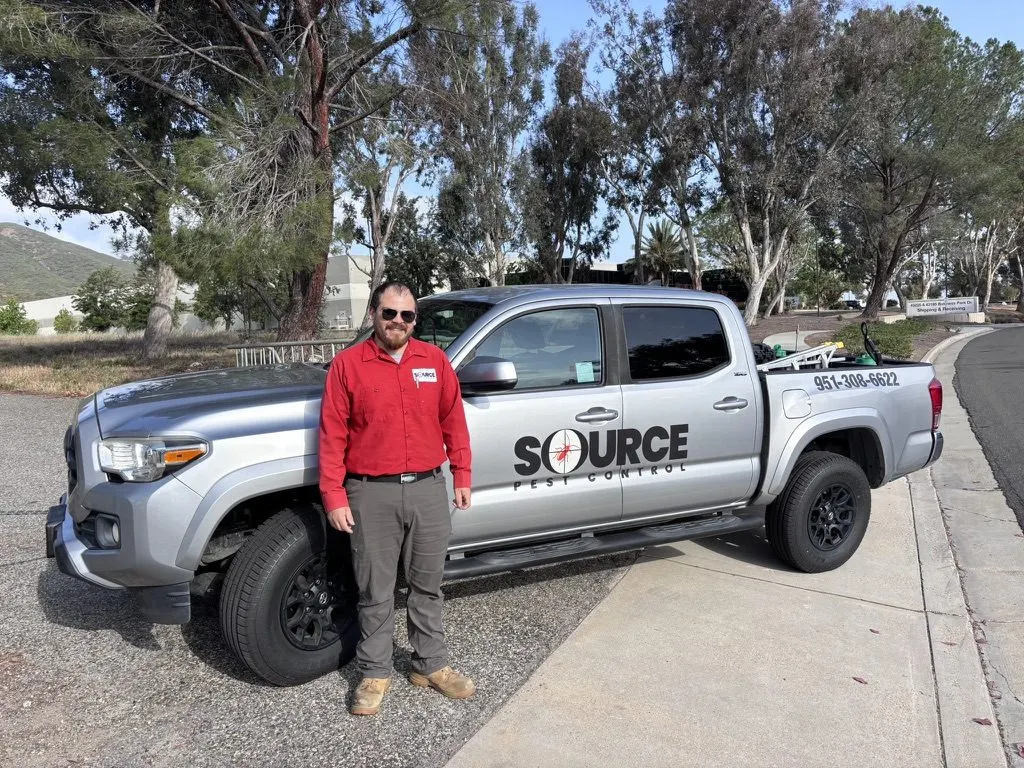
We treat yards for mosquitoes across Temecula, Murrieta and 18 more cities as an add-on to our Quarterly plan, priced by the size of the yard. UC IPM notes that mosquitoes breed in standing water, so the water in your yard matters as much as the spray, and the technician will help you find it on the visit.
What's included
Finding the water that's breeding them
Standing water is where mosquitoes start, so it's the first thing to find. Plant saucers, the drip tray under a potted citrus, a bucket behind the shed, a clogged gutter, the fold of a spa cover, a birdbath that hasn't been emptied in a week. UC IPM notes that any small container of standing water is enough, so check everything, and ask the technician about anything you're not sure of.
Daytime resting spots
Adult mosquitoes spend the day in shaded, humid foliage. UC IPM notes that some species are active at dawn and dusk and others through the day. In a Murrieta or Temecula yard the shade means the underside of hedges, dense ground cover, ivy on a block wall and the shaded side of fences. A licensed technician applies the mosquito spray to those spots according to its label.
The add-on to the Quarterly plan
Mosquito treatment is an add-on to the Quarterly plan, priced by the size of the yard, so a small courtyard and a half-acre lot with a hedge around it aren't priced the same. Ask Jenni about it when you set up the plan, or add it later when the first warm evenings make the patio unusable. The inspection and estimate for it are free.
Gutters, drains and the spots you can't see
Clogged gutters are a common breeding site in Murrieta and Temecula because the eaves are high and nobody looks up there between winter storms. UC IPM lists clogged rain gutters among the usual sources of standing water, along with yard drains, low spots in the lawn where irrigation pools and anything around the pool equipment pad that holds water after a backwash.
Advice you can act on right away
The biggest drop in mosquitoes comes from the water you remove. UC IPM recommends that you empty or flip containers, change birdbath and pet bowl water weekly, keep rain barrels sealed, cut back on overwatering, and fix window and door screens so the ones that remain stay outside. The technician can answer questions about any of it on the visit, and none of it costs more than a few minutes a week.
How it works
Call and tell us where they're worst
Call (951) 535-4220 and tell Jenni where in the yard the mosquitoes are worst and what time of day they bite. She'll book the treatment and answer your questions about it, including how the add-on is priced for your yard. We're open Monday to Saturday 8am to 6pm.
Find the breeding water
Before the visit, walk the yard and look for every spot holding water, including the ones that don't look like much, such as a saucer under a pot, a tarp fold, a toy truck in the planter or the tray in the fountain that stopped working. Show the technician anything you're not sure about, along with the shaded foliage where adult mosquitoes spend the day.
The mosquito spray
A licensed technician applies the mosquito spray according to its label. Before the treatment starts, show him where the kids play and where the pets spend their time, and ask anything you want to know, including where the spray will go and how it's kept clear of the pool and the vegetable bed. He'll tell you how long to keep everyone off the treated foliage.
Dealing with the water
Each breeding site needs one of four things. Dump it, flip it, drain it weekly or fix it. For ponds and fountains that can't be drained, UC IPM points to Bti products or mosquito fish, and the technician can answer questions about either. The spray handles the adults that are here now. Dealing with the water handles the next batch, and that part is yours.
Between treatments
Mosquito treatments wear off as new foliage grows and new adults emerge from any water left standing, so ask Jenni how the add-on fits your Quarterly visits, and keep the saucers, gutters and birdbaths dry between visits so each spray has less to deal with.
More about mosquito control
Mosquitoes in the Temecula Valley come from water, and in a dry climate that means the water people add themselves. UC IPM notes that any small container of standing water can support mosquito larvae, and lists the usual sources: plant saucers, buckets, kids' toys left in the yard, birdbaths, clogged rain gutters, tarps over a boat or a spa, and the tray under the potted citrus on the patio. Overwatered lawns and planter beds in Murrieta, Temecula and Menifee keep puddles sitting in the shade for days. UC IPM also reports that Aedes aegypti and Aedes albopictus, the small black and white day-biting mosquitoes, have spread across Southern California after first turning up in the state, and that they breed in exactly those small containers close to houses. That's why a yard can be full of mosquitoes even when there's no lake or creek for miles, and why the neighbor's neglected pool or the saucer under your own fern can be the whole explanation.
The mosquito spray is an add-on to our Quarterly plan, priced by the size of the yard, and it goes where the adults rest during the day. Adult mosquitoes spend the day in shaded, leafy spots such as the underside of hedges, dense ground cover and ivy on a block wall, and a licensed technician applies the spray to that foliage according to its label. One of our Yelp customers, Gabby K., saw the mosquitoes in her yard drop after the spray. What the spray can't do is stop new adults emerging from water that's still standing, so the technician looks for that water with you, and UC IPM's advice on removing it is the part a homeowner controls. Jared Brown has spent 27 years in this trade, and on a mosquito job the first question is where the water is, because that's where next week's mosquitoes are coming from.
Our 13-person team works from 29990 Technology Dr Ste 13 in Murrieta and covers 20 cities, from Canyon Lake and Lake Elsinore to Oceanside and Carlsbad. Call (951) 535-4220 Monday to Saturday 8am to 6pm and Jenni will set it up, and if you're already on the Quarterly plan she can add the mosquito treatment to it. Quick response is what customers say they picked us for, and a backyard you can't sit in through July is a fair reason to want someone out soon. Tell Jenni where in the yard the mosquitoes are worst, what time of day they bite and whether you have a pool, a pond or a fountain, because the day-biting Aedes mosquitoes and the dawn and dusk species point to different breeding spots, and that detail helps the technician know where to look when he arrives.
What do people ask about mosquito control?
Does the mosquito spray work?
Yes, on the adults that are there. The spray knocks down the adult mosquitoes resting in the hedges, ground cover and ivy where they spend the day, and that's the drop in bites people notice first. It works best when the breeding water in your yard is dealt with too, because new adults emerge from that water every week in warm weather, and no spray reaches the larvae in a birdbath.
Why do I have so many mosquitoes when there's no water near my house?
There's water somewhere within a short flight, and it's probably in a container. UC IPM notes that any small container of standing water can support larvae, and that the Aedes mosquitoes now spread across Southern California breed in small containers right next to homes. Plant saucers, birdbaths, clogged gutters, a bucket by the hose bib and the tray under the air conditioner condensate line are the usual sources in Temecula and Murrieta yards.
What are the small black and white mosquitoes that bite in the daytime?
Those are Aedes mosquitoes, either Aedes aegypti or Aedes albopictus. UC IPM reports that Aedes albopictus was found in California in 2011 and Aedes aegypti in 2013, and that while some mosquitoes are active at dawn and dusk, others bite through the day. They breed in small containers close to houses, so the fix is the same. Find and dump the water, and have the yard treated.
When are mosquitoes worst in Temecula and Murrieta?
In the warm months, when yards are watered most and nights stay warm. UC IPM notes that mosquitoes breed in standing water, and in a dry inland valley that water is almost always water people add: irrigation runoff, plant saucers, birdbaths, pool and spa covers and clogged gutters. If you're on the Quarterly plan you can add mosquito treatment, so call (951) 535-4220 to add it before the season starts.
Is the treatment a problem for my kids, pets or the pool?
Show the technician where the kids play, where the pets spend their time, the pool and the vegetable bed before he starts. He'll explain the steps for afterward, like how long to keep everyone out of the treated foliage, because the label sets that time. He's licensed by the state and applies the spray by its label, and when customers ask about the product we tell them it's labeled for use in hospitals and daycares.
What can I do myself to reduce mosquitoes?
Remove the water. UC IPM recommends emptying or flipping containers, changing birdbath and pet bowl water weekly, cleaning gutters, sealing rain barrels, not overwatering lawns and repairing window and door screens. For ponds and fountains, Bti products or mosquito fish handle the larvae. Do those things and the mosquito spray has far fewer new adults to deal with each week.
How long before the mosquitoes come back after a treatment?
That depends mostly on the water. The spray knocks down the adults that are already there, but UC IPM notes new adults keep emerging from any standing water nearby, and in summer heat that happens fast. A yard where the saucers and gutters stay dry holds up far longer than one where they don't, which is why it's worth walking the yard for water before the visit.
Seeing pests? Tell us what and where.
4.9 1,111 Google reviews- Monday to Saturday 8am to 6pm
- 20 cities served from Murrieta
- Free inspections and estimates
- Plans starting at $45 a month
Get a Free Quote
Request received.
We will call you shortly to confirm. Need us sooner? Call (951) 535-4220.
That did not send.
Something went wrong on our side. Please call so we do not miss you.
Call (951) 535-4220Rather talk now? (951) 535-4220