

Wasp nest removal in Temecula, Murrieta and North County
Paper wasp and yellowjacket nest removal around Temecula, Murrieta and North County. The technician treats the nest under the eaves, in the ground or inside a wall according to the product label, takes the comb down once the colony is dead, and tells you what's drawing them to the yard. We don't handle bees. Customers give us 4.9 stars over 1,111 Google reviews.
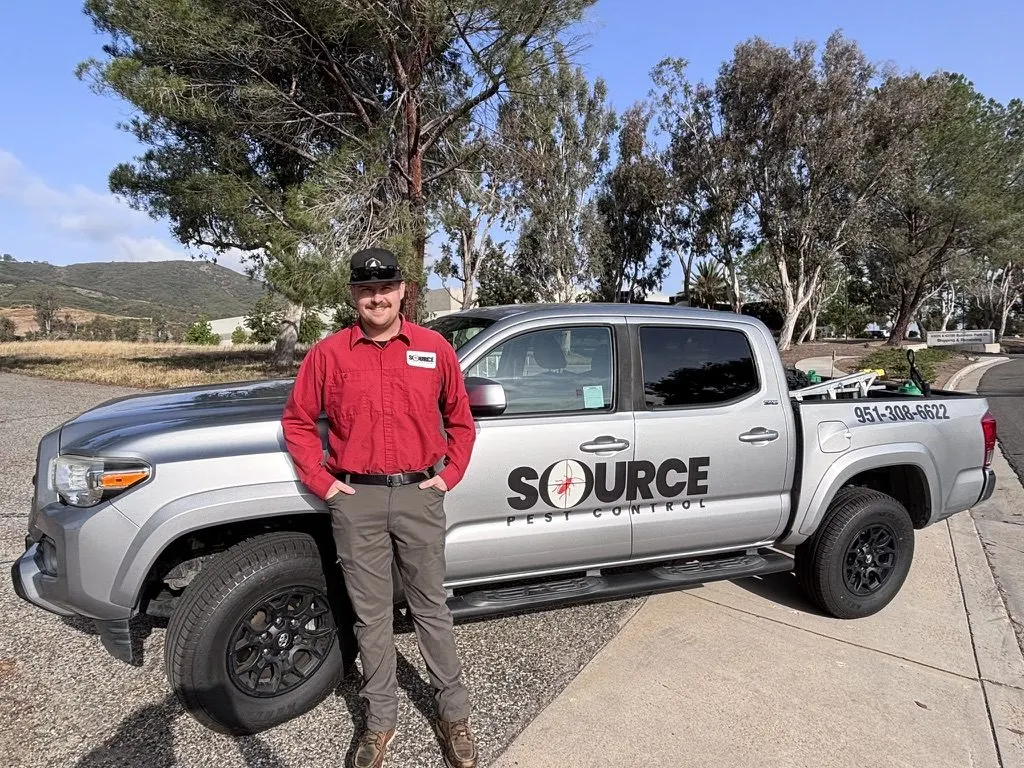
We remove paper wasp and yellowjacket nests from eaves, patio covers, the ground and wall voids across Temecula, Murrieta and 18 more cities. The technician treats the nest according to the product label, then takes it down once the colony is dead. Honey bees aren't part of this service, so describe the insects when you call (951) 535-4220.
What's included
Paper wasp nests under eaves and patio covers
The technician looks for every comb on the house, including the ones tucked behind light fixtures, inside the patio cover rafters, under the barbecue island overhang and behind the shutters. Each nest is treated according to the label and then knocked down and removed, so the wasps that were out foraging have nothing to return to. Early-season nests the size of a quarter come down too, before they grow.
Yellowjacket nests in the ground
UC IPM notes that ground-nesting yellowjackets commonly take over old rodent burrows, often along a slope, under a shrub bed or at the edge of a lawn. The technician locates the entrance by watching the flight line, treats the nest through the entrance with a labeled product, and points out the entrance so your family knows where it is and keeps the mower away from it until the activity stops.
Nests inside a wall or ceiling void
Yellowjackets that enter a gap in the stucco, a weep screed or a vent go on to build inside the wall. The technician treats the void through the entrance according to the label and tells you to leave that hole open while the colony is still active, because trapped wasps look for another way out and that can be into the house. Once activity stops, the gap can be sealed.
Scavenging yellowjackets around patios and pools
In late summer and fall a yard can be full of yellowjackets with no nest on the property at all. The technician looks for the nest within flight range, checks the things drawing them in, such as open trash cans, pet food left out and fallen fruit, and advises on lure traps placed around the edge of the yard, which UC IPM recommends for reducing foragers near a patio.
Catching new nests early
A paper wasp start under the roofline is easiest to deal with while it's small, so point out any you see. UC IPM notes that in spring a single queen does all the building, which is the easiest time to deal with a nest. Ask the technician about gaps in the stucco and vent screens worth sealing before next spring's queens go looking for a sheltered spot.
How it works
Tell us where the nest is and what the wasps look like
When you call (951) 535-4220, describe where the activity is, how many wasps you see, whether anyone has been stung and whether the insects are slim and yellow and black or fuzzy and golden. That last detail is how we tell wasps from honey bees over the phone. If it sounds like bees, we'll tell you before anything is booked, so you're not waiting on a visit that can't help.
Identification on site
The technician works out which wasp it is and finds the nest or nests. Paper wasps are visible on the open comb. Yellowjackets need a flight line to follow, so the technician watches where they enter the ground, the wall or the eave. Ask him to check the rest of the house too, because a second nest in the patio cover or behind a shutter is easy to miss.
Treatment according to the label
The technician applies a product labeled for wasp nests to the comb, the burrow entrance or the wall void, following the label. Our technicians are state licensed. Tell the technician where your kids and pets will be while the work is done, and ask anything you want to know before it starts, including how long to keep everyone clear of the nest afterward.
Nest removal once the colony is dead
Exposed paper wasp nests are knocked down and bagged on the visit once the wasps are dead. Ground and wall nests are left alone until the activity stops, then the entrance can be sealed. Removing the exposed comb matters because foragers that were away return to the spot for days, and an empty stalk under the eave gives them nothing to defend.
Changes that keep them from coming back
The technician points out what's drawing wasps: the uncovered trash can by the side gate, the dog's bowl on the patio, the fallen oranges, the gap in the stucco at the hose bib. UC IPM notes wasp colonies live only one season and a new queen starts fresh each spring, so removing early starts and sealing entry points keeps the next year quieter.
More about wasp control
Most wasp problems in the Temecula Valley come down to two insects. Paper wasps build the open, umbrella-shaped combs you see hanging from a stalk under the eaves, inside the patio cover, under the lip of a barbecue island or behind a shutter. UC IPM notes those nests rarely grow bigger than an outstretched hand, and that paper wasps are far less defensive than yellowjackets, which is why most people only notice them when the nest is over a doorway or next to the pool steps. Yellowjackets are the ones that ruin a backyard party. UC IPM describes ground-nesting yellowjackets that take over rodent burrows and colonies that move into wall and ceiling voids, plus aerial species that hang paper nests from eaves and tree limbs and defend them hard. In the hot, dry stretch from July through October, yellowjackets switch to scavenging and show up at trash cans, pet food bowls, fallen fruit and open soda cans across Murrieta, Menifee and Wildomar, and by then the nest that's producing them can be two yards away.
What you get from us is a licensed technician who knows which wasp he's dealing with before he touches the nest. He treats the nest according to the product label, waits for the colony to die, and removes the comb so returning foragers have nothing to come back to. For a ground nest or a wall nest he treats through the entrance and leaves it open until the activity stops, because sealing an active colony in sends the wasps looking for another way out, sometimes through the drywall. Jared Brown, our owner, has 27 years in pest control behind him, and wasps are one of the main pests we handle, alongside spiders, ants, earwigs, rats, mice and termites. People choose us for fast response, which matters when there's a nest over the front door and kids coming home from school, and a same-day visit is possible if the schedule allows it. We brush the eaves and clear the cobwebs on every regular visit, so point out any nest starting under the eaves while it's still the size of a quarter, which is the easiest time to deal with it.
Our office is at 29990 Technology Dr Ste 13 in Murrieta, and we work in 20 cities across both counties, including Wildomar, Lake Elsinore, Hemet, Fallbrook and Vista. The office is open Monday to Saturday 8am to 6pm, and the number is (951) 535-4220. One thing to know before you call: honey bees are not wasps, and we don't remove bees. If the insects are fuzzy, golden brown and going in and out of a wall, a water meter box or a tree hollow in large numbers, tell Jenni what you're seeing before you book, and she'll say whether it's a job for us. If they're slim, smooth and sharply yellow and black, or the nest is an open comb you can see the cells of, it's a wasp job, and the sooner it's treated, the smaller the colony. Tell her where the nest is, how many wasps you're seeing and whether anyone has been stung.
What do people ask about wasp control?
When are wasps worst in Temecula and Murrieta?
Late summer through fall, from about July into October. UC IPM explains that a single queen starts each nest in spring, the colony grows through summer, and wasps get more defensive as the colony gets bigger and food gets scarcer. In fall, yellowjackets mostly scavenge, which is when they turn up at patio meals and trash cans across the Temecula Valley. Paper wasp nests under the eaves are easiest to remove in spring while they're small.
Will the wasps come back to the same spot next year?
The old colony won't. UC IPM notes that yellowjacket and paper wasp colonies normally live one season, and only new queens survive the winter to start fresh nests in spring. A new queen can pick the same sheltered eave or the same burrow, though, so the old comb should come down and the wall gap or burrow should be sealed once activity stops. Point out new starts in spring while they're small.
Do you remove bees?
No. We handle wasps only and don't remove bees. Honey bees are fuzzy and golden brown, and wasps are slim, smooth and sharply yellow and black. If insects are going into a wall or a meter box and you're not sure which they are, describe them on the phone at (951) 535-4220, and Jenni can tell you whether it's a wasp job we can take or a bee job for someone else.
Can I spray a wasp nest myself?
UC IPM advises that nest treatment is best done through a licensed pest control operator, and that even at night, when the wasps are inside the nest, stings are still likely for anyone treating it themselves. Small, newly started paper wasp nests can be knocked down early in spring with little risk. Anything larger, anything in the ground and anything inside a wall is a job for a licensed technician with the right gear.
What's the difference between a paper wasp and a yellowjacket?
Paper wasps build an open comb hanging from a single stalk, with the cells visible from below, and they rarely sting unless the nest is handled. Yellowjackets build enclosed paper nests in the ground, in wall voids or hanging from eaves and tree limbs, and they defend them aggressively. Yellowjackets are also the ones that scavenge at picnics and trash cans in fall. The treatment is different for each, which is why identification comes first.
There are wasps going into a hole in my wall. Should I seal it?
Leave it open while the colony is active. Yellowjackets trapped inside a wall void look for another way out, and that can be through drywall into a bedroom. Leave the hole open, keep people and pets away from that side of the house, and call us. The technician treats the void through the entrance according to the product label, and once the activity has stopped the gap can be sealed.
Where should my kids and pets be during a wasp treatment?
Indoors, away from the nest, while the work is done. Before the work starts, tell him where your kids and pets will be, and he'll tell you what to do and how long to keep them clear of the treated nest, because the product label sets that time. With a ground nest, point out where children play in the yard, because the technician needs to know that before treating the entrance.
Seeing pests? Tell us what and where.
4.9 1,111 Google reviews- Monday to Saturday 8am to 6pm
- 20 cities served from Murrieta
- Free inspections and estimates
- Plans starting at $45 a month
Get a Free Quote
Request received.
We will call you shortly to confirm. Need us sooner? Call (951) 535-4220.
That did not send.
Something went wrong on our side. Please call so we do not miss you.
Call (951) 535-4220Rather talk now? (951) 535-4220