

Termite Control in Temecula, Murrieta and North County
Termite control for drywood and subterranean termites in Temecula, Murrieta and North County, by a company working in California since 2011. Our termite inspector, Tyler Williams, finds the species and how far it has spread, then Dylan Reed carries out the treatment that fits the findings. Tenting is arranged through a subcontractor.
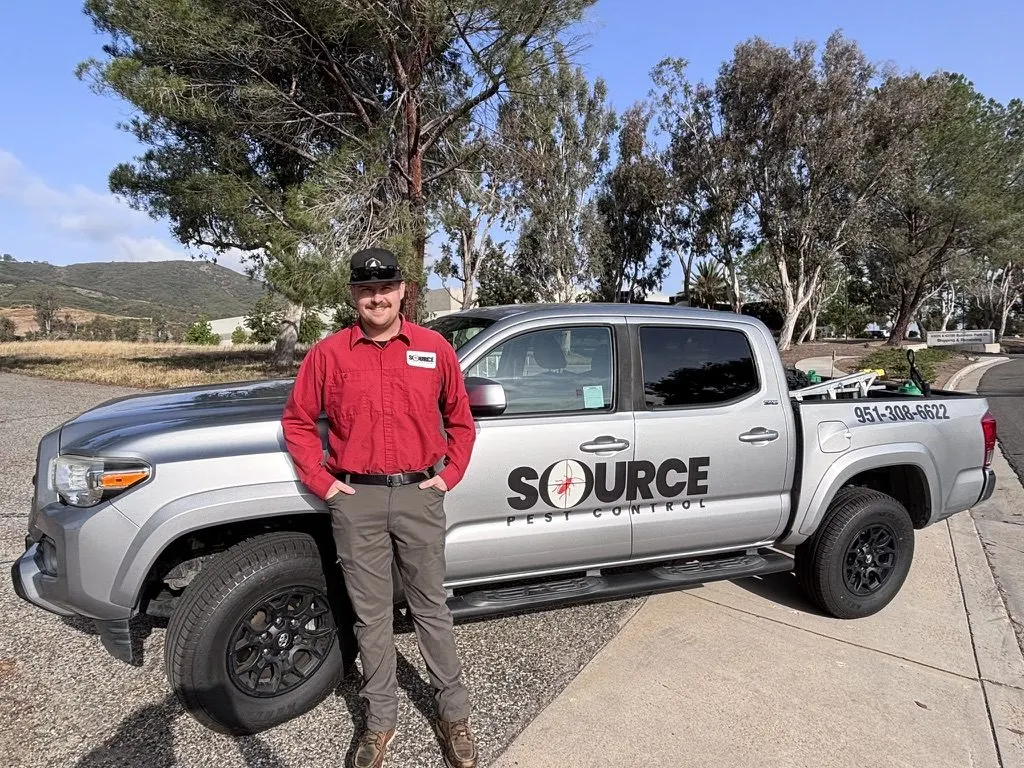
We treat drywood and subterranean termites across all 20 cities we serve in Southwest Riverside County and North San Diego County. Our termite inspector, Tyler Williams, finds the species and the extent of the activity first, then Dylan Reed handles the treatment that fits the findings, and you decide with those findings in front of you. Call (951) 535-4220.
What's included
Inspection by Tyler Williams first
Tyler Williams, our termite inspector, checks the attic, garage, exterior trim, window and door frames, patio covers and the foundation line for live termites, pellets, mud tubes, damaged wood and swarmers. He tells the two species apart and maps where the activity is. Every treatment decision we make comes from that inspection, so you're treating the termite you have, in the places it is.
Drywood termites
Drywood termites colonize the wood they eat, so control targets the infested wood. Where the activity is limited to a few known spots, such as a fascia board, a window header or a section of patio cover, the wood is treated directly. Where the colonies have spread through framing that can't be reached, fumigation of the whole structure is the option that reaches all of it. The inspection shows which case you're in.
Subterranean termites
Subterranean termites nest in the soil and travel to the house through mud tubes and foundation cracks, so control is aimed at the ground they cross. The usual approach UC IPM describes is a treatment of the soil along and under the foundation so the colony can't pass through it. Moisture around the foundation matters too, because subterranean termites need it, so a leaking hose bib or a sprinkler soaking the stem wall is worth fixing.
Fumigation through a subcontractor
Whole-structure fumigation, the tenting you see on homes around Temecula and Murrieta, fills the sealed house with a gas that reaches every piece of wood, including the framing no one can get to. It means moving out for a few days, bagging or removing food and medicines, and following the preparation list exactly. We arrange tenting through a subcontractor, so if the findings point that way, ask Dylan Reed what it involves for your household before you decide.
The conditions that invited them
Termites follow moisture and wood-to-soil contact. Sprinklers hitting the stucco, a planter box built against the stem wall, firewood stacked on the ground, a deck post set in dirt and an attic vent with a torn screen all get noted during the inspection. Fixing them is part of keeping the termites from coming back, and each one is something you can see and fix yourself over a weekend.
How it works
Call and describe what you found
Call (951) 535-4220 or use the form, then tell Jenni what you've seen: pellets under a window frame, wings on a sill, a mud tube on the stem wall, a hollow-sounding baseboard, or swarmers inside on a warm day. A photo helps. Say too whether the house is in escrow, because that changes which inspection you need.
Tyler Williams inspects
The inspection covers the accessible areas of the home: attic, garage, exterior trim, window and door frames, patio covers, fences that touch the house and the foundation line. Tyler Williams identifies the species, finds the active areas, notes past damage and lists the conditions that are drawing termites in. If anything in the findings isn't clear, ask him while he's still at the house.
Findings explained
Ask Tyler Williams to separate what's active now from damage that's already done and from conditions that could lead to a problem later. If you're in escrow, book the termite inspection service instead, which writes the findings up as a WDO report in the format escrow asks for. Either way, you hear the findings in plain words before anyone talks about treatment.
Choose the treatment with Dylan Reed
UC IPM describes the main options: direct treatment of infested wood, a soil treatment for subterranean termites, or whole-structure fumigation, which we arrange through a subcontractor, for widespread drywood activity. Dylan Reed handles our termite treatment, so ask him which of them fit the findings, what each one involves for your household, how long it takes and what you need to do to prepare. Then you decide.
After the treatment
Fix the conditions that let a colony return: the sprinkler aimed at the stucco, the firewood on the ground, the planter against the wall. A yearly termite inspection is a sensible habit for any home in Southern California, and it's the same inspection we do for a sale.
More about termite control
Two kinds of termite damage homes in Southern California, and they need different work. Drywood termites live inside the wood itself, with no contact with the soil, so they turn up in fascia boards, window frames, garage door jambs, attic framing and patio covers. The first sign is a small pile of pellets, like coarse sand, under a pinhole in the wood, or winged swarmers on a window sill on a warm afternoon. Subterranean termites live in the ground and come up through mud tubes on the stem wall, through cracks in the slab or along plumbing penetrations, and they're the ones that hollow out baseboards and door frames from behind. Both species are present throughout Southwest Riverside County and North County. UC IPM covers both in its Pest Notes, and the short version is that Southern California's warm climate gives both species somewhere to live, so a home here of any age can have either one.
Termite control starts with knowing which termite you have and how far it has spread, which is why our termite work begins with Tyler Williams, our termite inspector. He checks the accessible wood, the attic, the garage, the exterior trim and the foundation line, and separates what's active from damage left over from the past. From there, the treatment follows the findings, and UC IPM describes the main options. For drywood termites, the choice is between treating the infested wood directly where the activity is limited to a few spots, and whole-structure fumigation when the activity is spread through framing that can't be reached. We do the termite treatment ourselves, and when tenting is the answer, we arrange the fumigation through a subcontractor. For subterranean termites, control means treating the soil the colony travels through around and under the foundation. Dylan Reed handles our termite treatment, so ask him which options fit your home, what each involves for your household and what to expect afterwards. You decide with the findings in front of you.
Jared Brown has worked 27 years in pest control, in every position in the industry, and termites are the service where that experience matters most, because the wrong call is expensive in both directions. Treating a whole house for a problem confined to one fascia board wastes money, and spot-treating framing that is active in six places wastes time while the damage continues. We'll talk it through politely and listen to what you've seen, including the small things like a few wings on a sill or a soft spot on a door frame that homeowners sometimes dismiss. Termite work is a separate service from the pest control plans, with its own inspection and estimate. Our office at 29990 Technology Dr Ste 13 in Murrieta is open Monday to Saturday 8am to 6pm, and we cover Southwest Riverside County from Corona and Moreno Valley down to Temecula, and North San Diego County from Fallbrook to the coast. If you're selling or refinancing a home and need the inspection written up as a WDO report, that's our termite inspection service, Tyler Williams handles it, and for a sale or refinance it's $99 for the inspection and report.
What do people ask about termite control?
Who inspects and who treats termites?
Two people. Tyler Williams, our termite inspector, finds which termite you have, where the activity is and how far it has spread. Dylan Reed, who handles our termite and rodent work, carries out the treatment that fits those findings. Call (951) 535-4220 and Jenni will book the inspection first. If you're still working out whether what you found is termites, our guide to the signs of termites on the blog covers what to look for.
What's the difference between drywood and subterranean termites?
Drywood termites live entirely inside the wood they eat, need no soil contact, and leave pellets behind. Subterranean termites live in the ground, need moisture, and reach the house through mud tubes and foundation cracks. The difference drives the treatment: drywood control targets the infested wood or the whole structure, while subterranean control targets the soil and the colony in it. Both species are present across Southern California, as UC IPM notes.
Does every termite problem need fumigation?
No. Fumigation is the answer for drywood termite activity spread through framing that can't be reached any other way. Drywood activity confined to a few accessible spots is treated directly in the wood, and subterranean termites are never treated by tenting, because the colony is in the soil. When tenting is needed, we arrange it through a subcontractor and do the other treatments ourselves. Tyler Williams's inspection shows which case your home is in.
What time of year are termites most active in Temecula and Murrieta?
Termites feed all year in Southern California's climate, so damage doesn't stop in winter. The visible events are the swarms. Subterranean termites swarm on warm days after rain, in fall and in spring. Drywood termites swarm on warm afternoons in late summer and fall. Wings on a sill at either time are the cue to book an inspection, because the colony that produced them is close by.
How much does termite control cost?
It depends on the species, how far the activity has spread and the method that fits, so the honest answer comes after the inspection. Direct treatment of one infested board, soil treatment around a foundation and whole-structure fumigation are very different jobs, and termite work is separate from the pest control plans. A WDO inspection for a sale or refinance is $99. Call (951) 535-4220 to book the inspection, and ask for the findings and the price of each option that fits before you commit to anything.
Can I treat termites myself?
Store-bought products reach the termites you can see, which is a small part of any colony. Drywood colonies sit inside the wood where surface sprays don't go, and subterranean colonies are in the soil, sometimes well away from the house. Our technicians apply products by the label into the wood or the soil where the colony lives, and the inspection tells them where that is. The money spent guessing is better spent on the inspection.
Do you treat termites in Riverside, Corona and North San Diego County?
Yes. Termite control covers all 20 cities we serve, from Riverside, Corona and Moreno Valley to Temecula and Murrieta, and the six North County cities from Fallbrook to Carlsbad. Drywood and subterranean termites are both present across Southern California, as UC IPM notes, so the work starts with an inspection wherever the home is. Call (951) 535-4220.
Seeing pests? Tell us what and where.
4.9 1,111 Google reviews- Monday to Saturday 8am to 6pm
- 20 cities served from Murrieta
- Free inspections and estimates
- Plans starting at $45 a month
Get a Free Quote
Request received.
We will call you shortly to confirm. Need us sooner? Call (951) 535-4220.
That did not send.
Something went wrong on our side. Please call so we do not miss you.
Call (951) 535-4220Rather talk now? (951) 535-4220